Monitoring Center Staffing Ratios to Camera Count
AI verification before human review cuts false alarms to let operators focus on genuine threats.

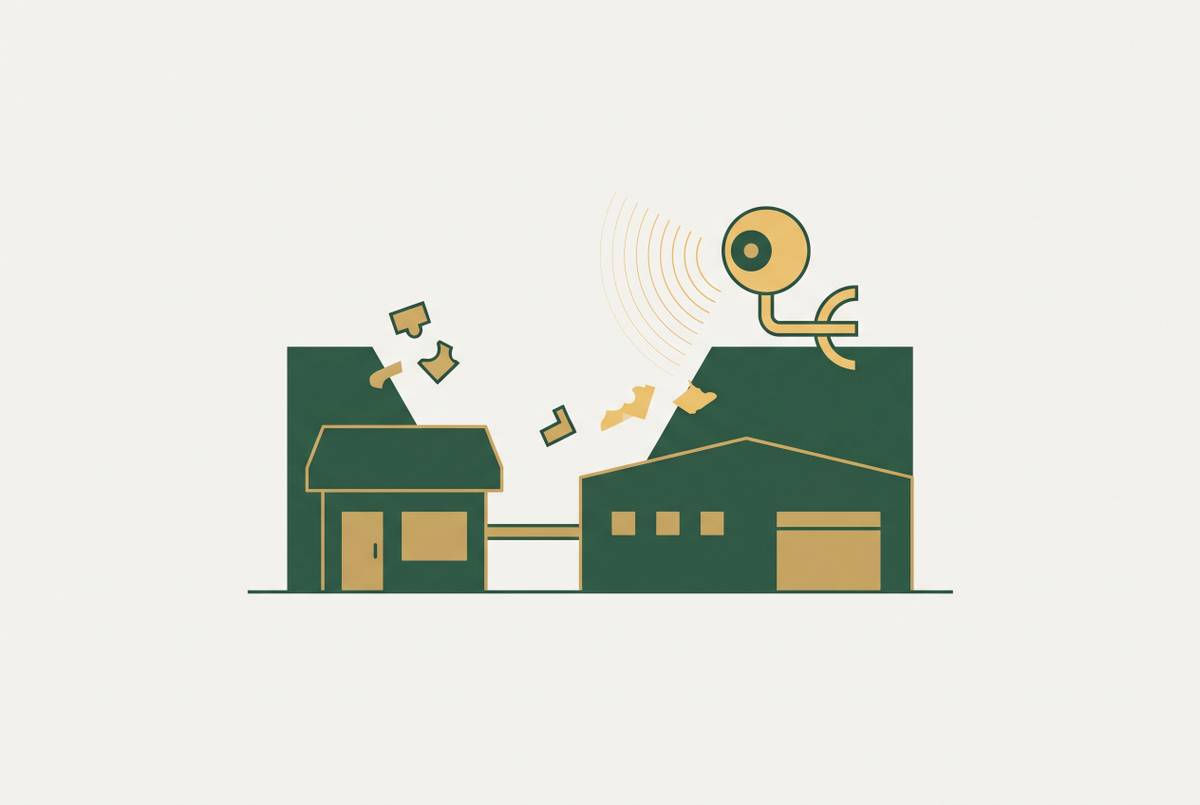
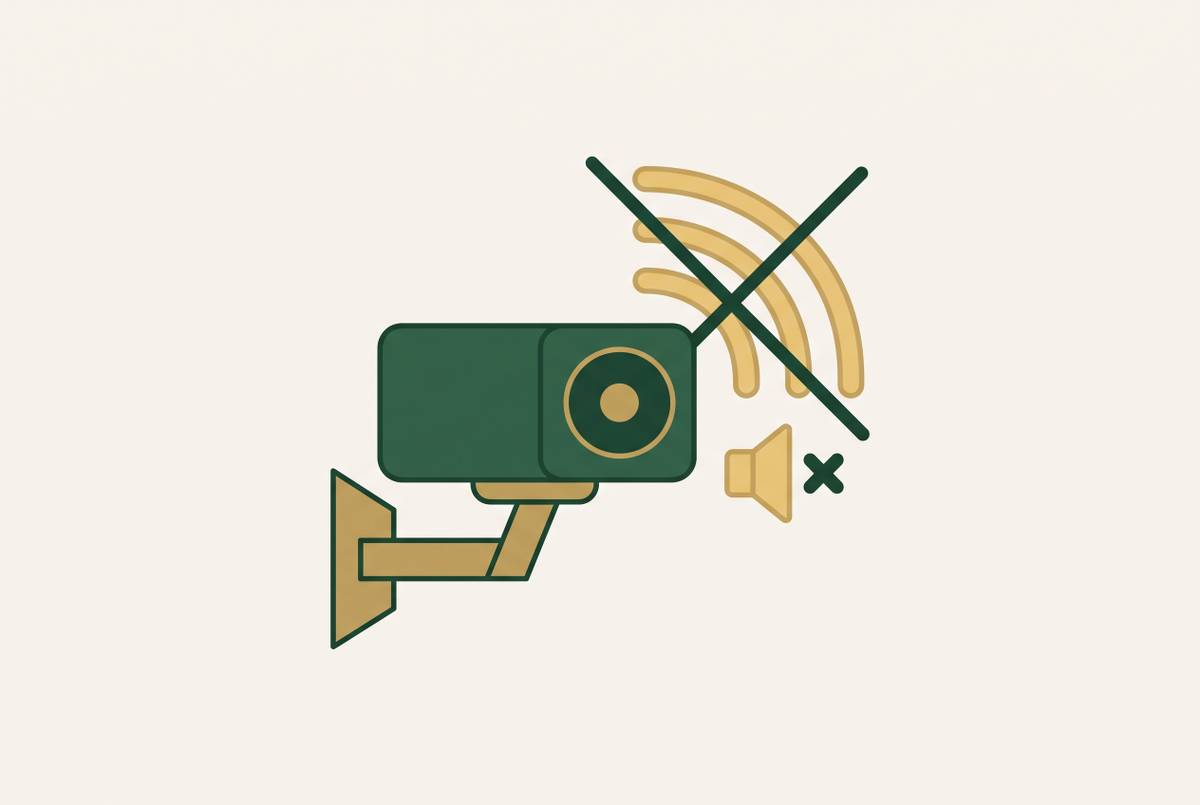
Monitoring center staffing ratios to camera count are not a budget line that a company can fix by hiring more people. Muting a high-alert camera to cut down on false alarms does not reduce the noise in a security operation, it removes the coverage entirely, turning a monitored point on a site into a blind spot with a working lens pointed at it. A camera that no longer sends alerts is a camera nobody is watching, and the activity in its field of view continues whether or not anyone intended to stop looking.
The operator-to-camera ratio as a structural problem
Human attention has a ceiling, and that ceiling does not move no matter how the org chart is drawn. One operator can reliably watch a few dozen live feeds at a time, but past that, divided attention costs real events their due notice. Past that point, the operator's eyes and judgment are a fixed resource while the camera count is not, which is a mathematical guarantee that some fraction of what happens on camera will go unseen.
This matters because the industry's instinct, when a site grows, is to add cameras first and worry about review capacity later. Each new feed adds more potential alarm volume, but no one adds a single additional unit of attention to process it. A monitoring center can advertise a high camera count per operator, but that does not have to mean efficiency. It may be demonstrating that the ratio has already crossed the point where the operator can see what the cameras are capturing. The number being sold as a strength is the same number that defines the gap in coverage.
How attention degrades across a shift
An operator's effectiveness is not constant across an eight- or twelve-hour shift. It slopes downward as hours accumulate, so a camera load that felt entirely manageable in the first hour can overwhelm the same person by the eighth. Nighttime shifts make this worse on their own terms: low light conditions make detection and recognition harder even for someone who started the shift sharp, and the extra strain of parsing dim, grainy footage accelerates the fatigue that was already building.
An alarm that fires at minute 90 of a shift does not arrive in isolation. It lands in a queue, and its position in that queue depends on how many alarms are already ahead of it and on how much attention the operator has left to give, neither of which the alarm itself has any control over. A genuine intrusion event can sit behind a stack of unresolved clips for twenty minutes or more, because the queue grows with camera count and alarm volume while the operator's capacity to clear it stays fixed. This is the mechanism by which "more cameras" becomes a liability instead of an asset under a legacy model: volume keeps climbing while review capacity sits still.
False alarms are not a nuisance, they are the mechanism that burns through attention before a real threat ever gets it
The queue sitting in front of a fatigued operator at minute 90 is full of noise, not verified threats waiting patiently for review. Industry reports put historical false-alarm rates in conventional systems as high as 95%, so most of what an operator reviews in a shift carries no security significance. Shadows shifting with the sun, headlights sweeping across a parking lot, wind moving a trash bag across a loading dock: a motion-triggered system cannot tell any of that apart from an actual intruder before a human looks at it.
Operators who spend shift after shift clearing alarms that turn out to be nothing learn, correctly given the evidence in front of them, to expect the next alarm to be nothing too. That is exactly the condition a real threat needs if it wants to pass unnoticed. Security researchers have documented this pattern, known as alert fatigue, as a vulnerability that sophisticated actors can exploit directly: not by evading detection, but by generating enough background noise that a genuine signal gets lost in it, a pattern seen in real-world incident investigations in multiple countries. The cost does not stop at the monitoring center either. When an unverified alarm triggers a police dispatch, it pulls on emergency-response resources that departments increasingly cannot spare, so a number of jurisdictions now require some confirmation of an actual event before an officer is sent. You should not tolerate a high false-alarm rate as an operational quirk. It is the direct mechanism by which real threats get buried, and cutting false-alarm volume at the source is what solving the ratio requires. It has filled the queue with more of what the operator has to wade through before reaching anything real, worsening the ratio between genuine and false alarms.
Why More Staff, Offshore Centers, and Camera Muting Fail
So what do monitoring providers actually do about it? The three most common responses are adding headcount, moving operator labor offshore to cut costs, and muting or suppressing the cameras that generate the most false alarms. Each one trades away something real, and none of them touches the ratio math that produces the problem.
Adding headcount scales cost in a straight line, but it does not change what any single operator can watch. If you double the staff, each person still hits the same cognitive ceiling, so during a peak alarm period, the queue still builds faster than the added bodies can clear it. Offshoring cuts labor cost, but it introduces latency, communication friction, and a weaker grasp of a specific site's layout and patterns, none of which make the queue smaller or make it grow more slowly.
Muting noisy cameras is the most self-defeating of the three. It stops the alerts by stopping the coverage, and a camera that no longer sends alarms is functionally no different from a camera that was never installed, except that the client believes it is still being watched. This is the core of why silencing an alert-heavy camera creates a blind spot rather than solving anything: the activity in that camera's field of view does not stop, only the visibility into it does. As event-driven monitoring providers point out, a camera that cannot be verified produces alerts nobody can act on, and the whole value of a monitoring product depends on what the camera and the response workflow behind it can actually deliver once an alert fires. Overage pricing, where a provider bills extra once alarm volume crosses a contracted threshold, is the financial fingerprint of this same limitation. It is the provider admitting, in the language of a contract, that it cannot process alarm volume above a certain point without charging more for it. The service-level agreement only holds as long as alarm volume stays low.
What changes when AI reviews every alarm first
If an AI layer reviews every incoming alarm and forwards only the events that clear a verification threshold, it changes the ratio equation at its root. The operator's queue, once proportional to how many cameras are installed, becomes proportional instead to how many genuine events actually occur, which is a small fraction of total alarm volume on any given site. That shift is what separates an architecture that degrades as camera count rises from one that does not.
This is the model Verdun builds its monitoring service around: AI agents that reason through each alarm using context specific to the site before a human operator is ever brought in, so that the person who eventually responds is evaluating a verified candidate threat rather than digging through a pile of shadows and headlights. The distinction matters because it restructures what reaches the operator in the first place, so that camera count stops being the thing that determines how much a human has to review.
Why site-specific context determines whether the AI works
An AI layer that scores alarms without knowing anything about the site it is watching will generate false positives at a rate that brings back much of the queue it was supposed to clear. Context here means specific things: authorized schedules for who is allowed where and when, zone-level rules that differ from one part of a property to another, time-of-day logic, and a working memory of known vehicles and personnel. Without that information, the same motion event, a person walking across a loading dock, means two entirely different things depending on when it happens, and the AI has no way to tell them apart. A person on that dock at 2 a.m. on a night with no scheduled activity is a plausible intrusion. The same motion from a delivery driver at 6 a.m. on a Thursday is routine. If the system cannot separate those two cases, it cannot give you a meaningful confidence score. It can only report that something moved.
Multifamily housing and college campuses make this especially visible, because residents generate a continuous stream of benign motion throughout the hours a property is monitored, coming and going, carrying groceries, walking dogs, parking cars. Generic motion analytics, lacking zone-specific rules and a connection to who is actually authorized to be where, cannot tell a resident from an intruder in that kind of environment. Verdun's approach to this problem is to filter false alarms out before they ever reach the operator queue, using AI agents that handle the first pass of review and forward only verified events, which breaks the alert-fatigue cycle at its source instead of asking a human operator to build up tolerance for a high rate of noise. For a security buyer evaluating any monitoring service, the useful question is what site-specific information that AI draws on to score each event, and how that context gets kept current as the site itself changes, new tenants move in, schedules shift, delivery patterns change.
Reading response-time SLAs against the queue problem
Published benchmarks for professional monitoring centers treat a window of 25 to 30 seconds from event to operator action as the ideal. When an AI-augmented model pushes for faster initial triage and verified escalation inside a tighter window, it compresses the entire workflow that sits behind that number, not just the acknowledgment step. Verdun's architecture aims for verified threat escalation to reach a human operator quickly from the moment an alarm triggers, a metric that starts at the event itself rather than at the moment an operator happens to pick it up, and that timing is only achievable because the AI layer is doing first-pass review continuously rather than adding events to a queue for a human to triage later.
Buyers evaluating a response-time SLA should ask two direct questions. Where does the clock actually start? And what is the maximum queue depth the system allows before that SLA is at risk? A 30-second acknowledgment commitment is worth very little if there are already a dozen other alarms ahead of it once volume peaks. The number on the contract only means what it claims to mean if the architecture behind it stops the queue from building up.
What buyers should look for in a monitoring architecture
Everything above points to one practical test: does a monitoring architecture scale with camera count, or does it degrade as camera count rises? Legacy monitoring degrades, because more cameras mean more alarm volume, longer queues, more exposure to false alarms, and more cognitive load spread across a fixed pool of operators. Past a certain point, each additional camera adds almost nothing in practice, because the queue it feeds into is already too deep for anyone to clear.
An AI-first architecture reverses that relationship. More cameras add more coverage without a proportional increase in what reaches the operator, because the AI layer absorbs the added volume and forwards only the events that clear verification, turning camera count into an asset. The economics back this up: remote video monitoring with active intervention runs at a fraction of the cost of staffed guard posts, and AI integration cuts the per-incident labor on top of that, but only if the AI layer is genuinely filtering noise rather than passing it straight through to operators who then hit the same ceiling they were always going to hit. The architectural flaw running through adding headcount, offshoring, and muting cameras is that none of the three separates a verified threat from background noise before a human is asked to look at it. A monitoring service that pairs AI filtering with trained human operators addresses the queue at its source, because operators only engage with events that actually call for a response.
A buyer sorting through options should be asking a short, specific set of questions: What is the operator-to-camera ratio during a peak shift? How is alarm volume handled at sites with a history of frequent false alarms? Does the AI layer draw on site-specific context, or is it running generic motion detection? Where does the SLA's response-time clock actually start? And what happens to coverage once alarm volume crosses whatever threshold is written into the contract? Verdun's model is built to answer each of those with a structural fact about how the system works rather than a promise about staffing levels, pairing AI agents that reason from site-specific protocols with human operators who step in only once an event has already been verified.