Overage Pricing Models in Commercial Video Monitoring Contracts
How vendors bill for false alarms instead of actual security work.
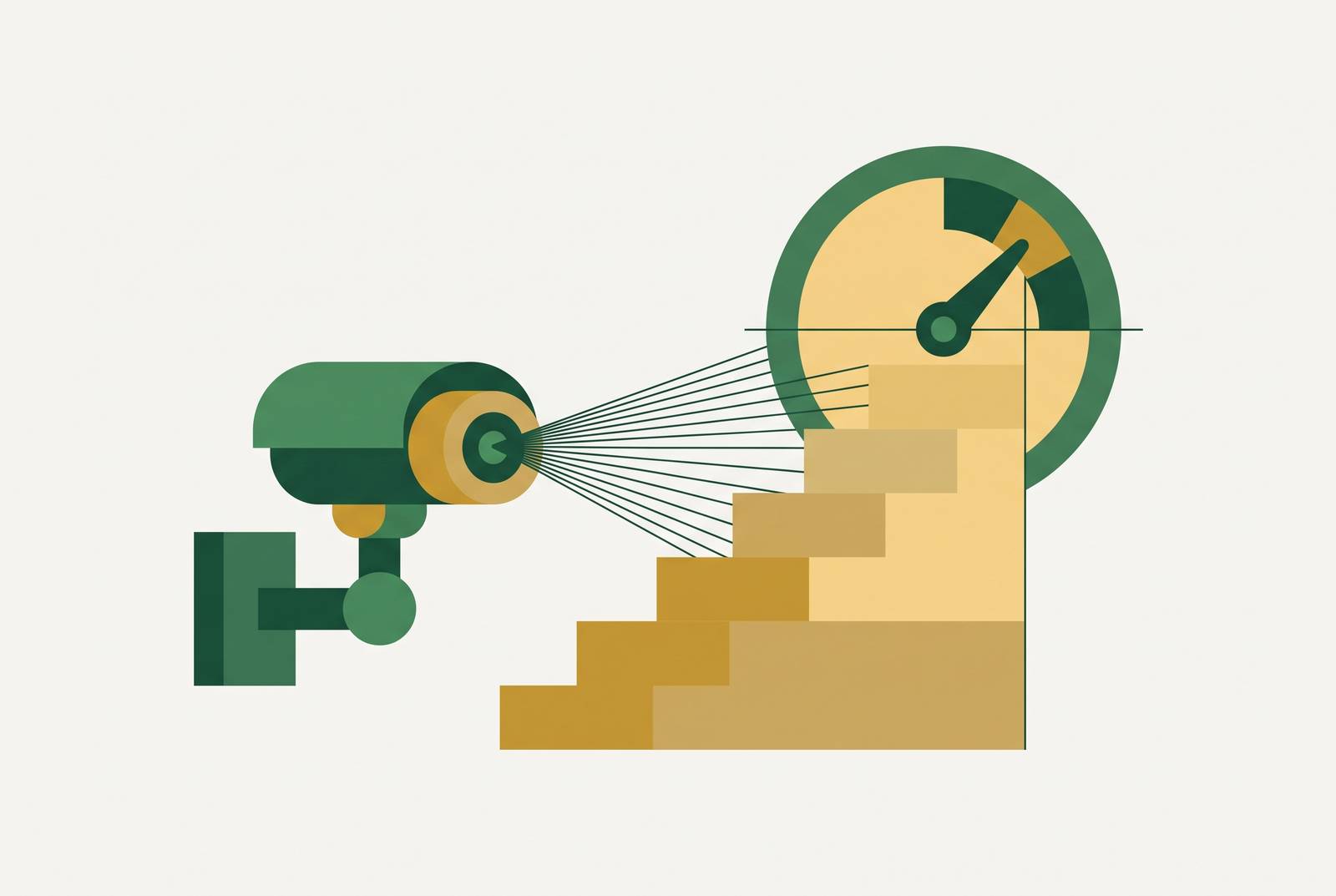
Overage pricing in commercial video monitoring contracts works on a simple structure: the monthly rate includes a baseline allowance of alarm events, and any volume above that line gets billed at a separate per-unit rate. The logic borrows from tiered pricing models you see across SaaS and cloud infrastructure: you pay a predictable rate for expected usage, and you only pay variable cost once demand runs past what was forecast. For a monitoring vendor, the structure has a clear justification: a site that triggers more alarms requires more operator time, and variable billing is how that added labor cost gets recovered. For the buyer signing the contract, the arrangement carries an implicit promise that goes beyond simple cost recovery. Paying more under an overage clause is supposed to mean that something happened more often at the site, that the extra charge corresponds to extra security activity worth paying for.
Assumptions the overage model makes about the underlying alarm signal
That promise only holds if the alarm stream reflects real activity, and in traditional video monitoring systems, it does not. False alarm rates in these systems exceed 97%, so fewer than three alarms out of every hundred correspond to an actual threat. A per-event overage fee applied to a stream built almost entirely of false alarms does not charge for security work. It charges for environmental noise, systematically, and at a per-unit markup on top of it. The billing meter has no way to distinguish a verified intrusion from a gust of wind moving a tarp across a construction yard or a poorly calibrated motion zone catching shadows in a retail parking lot at dusk. Both generate the same line-item charge. A buyer looking at a monthly invoice sees a number that resembles security activity, when in most cases the number is mostly atmospheric and mechanical triggers passing through a sensor that was never built to tell the difference.
Motion detection in these systems typically works by flagging a pixel change against a threshold and forwarding it. That design is undiscerning by nature. A USPTO patent on alarm verification describes conventional sensors as ones that "will always suffer from false alarms" precisely because they are "relatively undiscerning." Some monitoring systems apply verification delays or cross-zone logic before an alert reaches a human operator, so not every trigger arrives at the review queue unfiltered. But where that filtering is absent or shallow, the volume of noise passed through to billing stays high, and the charge for reviewing it lands on the client regardless of outcome.
Vendors have a response to this, and it has some merit on its face: operators still have to look at every alarm that comes in, whether it turns out to be real or not, so the labor cost behind that review is genuine even when the alarm itself is false. That argument only identifies the problem. The cost of reviewing noise is being passed to the client as though the noise were a service rendered, with nothing in the contract to separate a reviewed false alarm from a reviewed real threat. The client, in that structure, pays for the failure of the detection layer.
Alarm queue growth as false positives become the rate-limiting factor
The mismatch between billing and reality has an operational dimension, not just a financial one. Human operators process alarms in sequence, and when the overwhelming majority of that sequence is false positives, every alarm waiting behind them, including the real ones, waits longer. The billing model charges for the queue's volume, not for what the queue eventually finds.
A single operator can be assigned to watch a large number of camera feeds at once, but human visual attention was never built to sustain reliable focus across dense, low-signal video streams for hours at a stretch. Research on video monitoring operators has found that a meaningful share of target behaviors go unnoticed during sustained review tasks, a pattern that reflects the structure of the job. When alarm volume runs high and the ratio of real threats to noise runs low, a genuine intrusion has to wait behind every false trigger that arrived ahead of it in the queue. The practical effect is that the monitoring system behaves, at a structural level, as though it cannot tell a trespasser from a gust of wind, because in the moment the alarm is generated, it often cannot.
False alarms carry costs beyond the delay itself. Industry pricing already treats AI integration and false alarm filtering as a distinct cost driver, because unfiltered alarms create operational and financial drag at the site level that compounds over time. That drag does not stay fixed. It scales with alarm volume, alarm volume scales with camera count and site activity, and site activity tends to grow as a business grows. Adding more operators does not fix the underlying throttle, because the queue problem is a function of signal quality.
Monitoring contract event thresholds and where exposure hides within them
The contract terms governing overage billing are built around volume thresholds that have little to do with the actual risk profile of a given site, and that gap is where buyers end up exposed to costs they did not anticipate when they signed. Some per-event structures bill one rate for the first block of events included in a billing period and a separate, higher per-unit rate for everything beyond it, so a high-activity site does not just pay more. It pays at a compounding rate as alarm volume climbs past the baseline. The baseline itself is typically calibrated to an average or low-activity site. Construction yards, retail parking lots, and industrial facilities that generate dense motion from entirely legitimate operations will cross that threshold routinely, simply by functioning as intended.
The sites most likely to exceed their allowance are often the sites that need monitoring coverage the most, so the billing model ends up penalizing operational complexity instead of rewarding the coverage those sites actually require. Two contract proposals can show an identical monthly base rate on the cover page and still produce very different total costs over a year, depending entirely on how the event threshold is defined and how the overage rate above it is structured. The operating detail buried in the appendix can change the total cost of the contract more than the headline number on the first page does. Buyers evaluating a proposal need a precise answer to a basic question: what counts as a billable event, a motion trigger, an operator review, or a verified alarm. The answer differs by vendor, and it changes the total cost of the contract materially, especially for any site with activity dense enough to flirt with its threshold in a normal month.
The tradeoff between cost, coverage, and response quality in pricing tiers
The monitoring market generally offers a few recognizable tiers, and each one trades cost against coverage and response quality in a different way. Basic alarm verification is the lowest price point: operators review footage only after an alarm has triggered, so the service documents an incident after it has already occurred. Standard live monitoring moves up from there: it covers scheduled surveillance during a site's highest-risk hours at a mid-range per-camera monthly cost. Premium 24/7 monitoring sits above both: it offers continuous surveillance and rapid response at a correspondingly higher per-camera rate. Per-event pricing runs alongside these tiers as a different structure entirely: it charges per verified event. It can suit a low-activity property well, but it exposes a high-activity site to exactly the compounding overage risk described above.
Which tier fits a given site depends heavily on property type and activity level, and the mismatch between a site's actual profile and the tier it was sold is where most overage exposure originates. Office building monitoring tends to run at a mid-range monthly cost, because activity there stays relatively low and predictable. Warehouse monitoring runs somewhat higher. Manufacturing CCTV monitoring costs more still, a reflection of the operational complexity those sites generate on a normal working day. Construction site monitoring sits among the highest monthly ranges in the market, particularly once mobile equipment is included in the coverage scope, because a working construction site produces dense, continuous motion from legitimate personnel and machinery, the exact condition that makes per-event pricing most dangerous for a buyer.
None of this makes any single tier the correct default choice. Alarm-triggered monitoring costs meaningfully less than live monitoring, but that price gap reflects a genuine difference in what is being delivered: reactive monitoring documents an incident after the fact, while live monitoring carries the possibility of interrupting one in progress. A lower-priced plan can look like the obvious choice on paper right up until alert volume overwhelms the staff reviewing it, footage proves hard to retrieve when it is needed, or no one on the contract has a clear escalation path to follow. Per-event pricing is structurally mismatched with high-activity sites, and the examples above show where that mismatch tends to appear.
AI-based alarm filtering and the economics of per-event billing
The overage problem described throughout this piece is a filtration problem, and the architecture that addresses it intervenes at the point where false positives get generated, rather than after they have already been counted and billed.
When an AI system filters alarms before they reach a human reviewer, the population of events that reaches the billing layer shrinks and becomes far more signal-dense. The per-event cost on that smaller population may run higher per unit than under a traditional per-event contract, but the total unit count is now governed by real activity at the site rather than by noise generated through wind, shadow, or a miscalibrated sensor. That shift depends on context the sensor itself cannot supply. Distinguishing a night-shift worker walking a familiar route from a trespasser, or a gate swinging in the wind from a forced entry, requires knowledge of a site's schedules, authorized personnel, and established activity patterns. Without that context, even an alert flagged by an AI system still carries a high false-positive rate. The payoff of getting that context right is a workflow in which human operators spend their time on events that are verified or very close to it, which restores the original premise overage pricing was supposed to deliver: that a higher charge corresponds to a genuine increase in security events, not a louder stream of noise passing through an undiscerning sensor.
What buyers should examine before the overage clock starts
Understanding how overage billing interacts with a false alarm rate above 97% gives a buyer a fundamentally different set of questions to bring to a contract negotiation, and the most important of those questions has nothing to do with the monthly base rate printed on the first page. It concerns what happens to alarm volume before the billing meter starts running. A buyer should first establish precisely what counts as a billable event under the contract, since the definition can mean a motion trigger, an operator review, or a verified alarm, and each definition can shift the total cost of a contract substantially for any site with real activity levels. The baseline event allowance deserves equal scrutiny: a buyer should know how that number was set and whether it reflects the site's actual alarm history or expected activity level. Whether the contract places any cap on overage charges matters just as much, since without one, the financial exposure in a high-alarm month is effectively unlimited. A buyer should also ask directly whether the provider applies any filtering, AI-based or otherwise, before an event reaches the billing tier, and if so, what reduction in false positives that filtering actually produces, since that figure determines how much of the invoice will reflect real activity versus noise. Seasonal and event-driven spikes deserve their own line of questioning too: a contract should specify how it handles the alarm surge that comes with a construction project nearing completion, a retail site entering its holiday season, or a multifamily property going through a wave of tenant turnover, since these are precisely the conditions under which per-event exposure tends to compound. Finally, the scope of the contract has to be read in full rather than skimmed for the headline number, because two proposals can show the same monthly base rate and still produce very different real-world outcomes depending on how events are defined, how thresholds are set, and what the escalation protocol actually requires of the provider. A monitoring contract that charges per event without filtering for false positives is an alarm-processing contract, not a security contract, and the two are different products carrying very different value to the buyer who signs for one expecting the other.