Muted Cameras Still Appear on the Coverage Map and That Is Exactly the Problem
Silenced cameras hide detection gaps while keeping zones marked as protected.
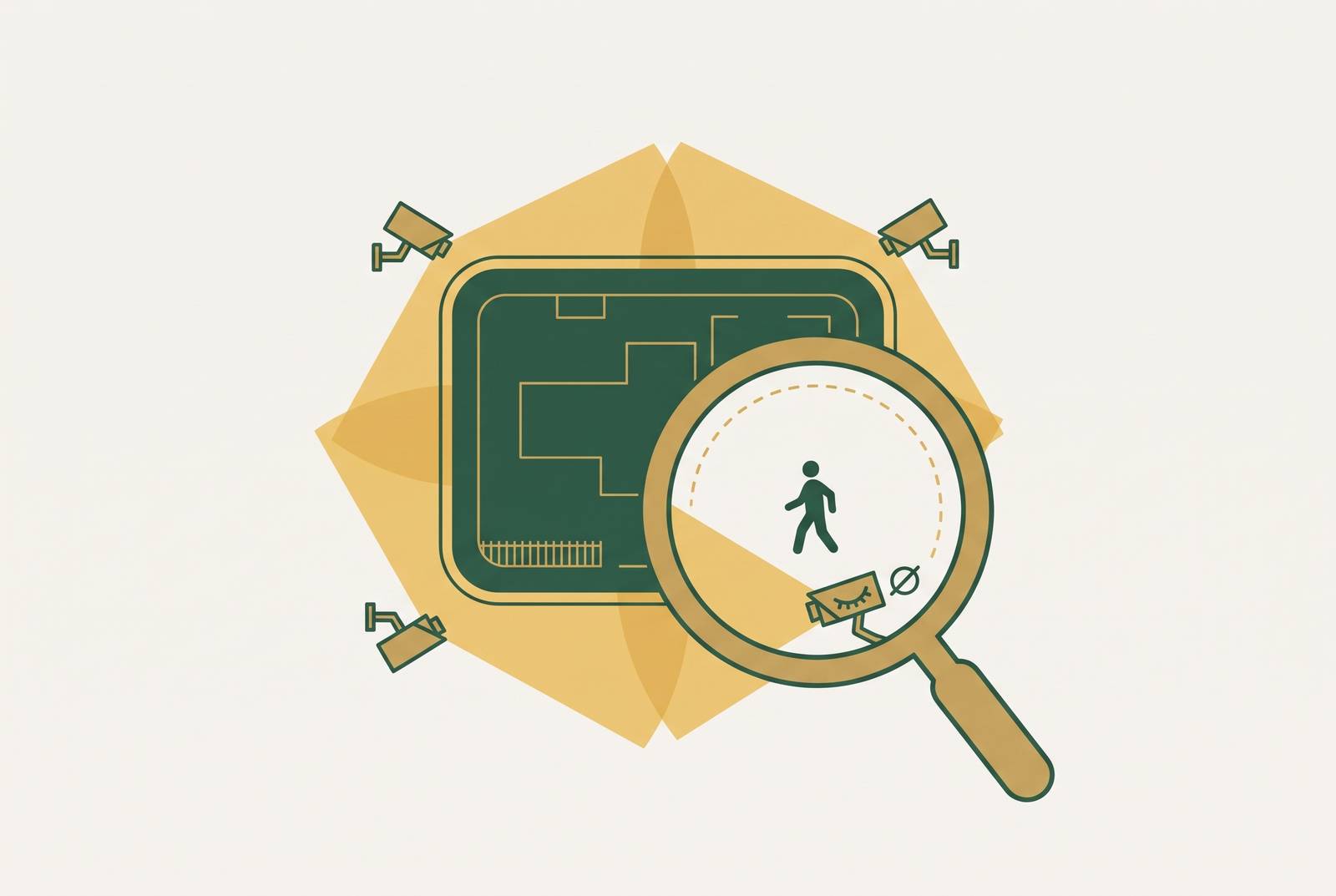
Muting noisy cameras is not a monitoring solution because it removes alerts from active oversight without removing the camera from the coverage map. The zone still appears protected, but a threat there no longer enters the response process. Handling alert fatigue without creating that gap requires context-aware AI triage before human review, with accountable operators responsible for verified response.
Why muting a camera feels like a reasonable fix and why that feeling is wrong
A camera keeps firing on shadows, rain, and headlights, and each time it does, it takes attention that could go to a real threat. The operator has a practical problem to solve. In a legacy video management system built on pixel-change detection, the available controls change how much movement triggers an alarm, where detection applies, or when it operates. None gives the detector an understanding of what moved. The operator can reduce the workload, but only by changing what the system is allowed to notice.
The limitation begins with the detection mechanism. When enough pixels change between frames, the system fires, without a model of the scene or a concept of the moving object. A person scaling a fence and a cloud shadow crossing the same ground are structurally indistinguishable to that counting algorithm. Raising thresholds cuts sensitivity, shrinking zones leaves areas where detection no longer works, and adding schedules leaves times when it is off. Each adjustment trades some coverage for quiet.
Muting is the endpoint when those tuning levers fail. It is a rational response to a system that offers no remaining way to separate useful alarms from recurring noise. That does not make it a sound monitoring solution. The operational pressure disappears because the alarm source disappears, with the system’s ability to recognize threats unchanged. The camera stays on the map.
What stays on the map after a camera goes quiet
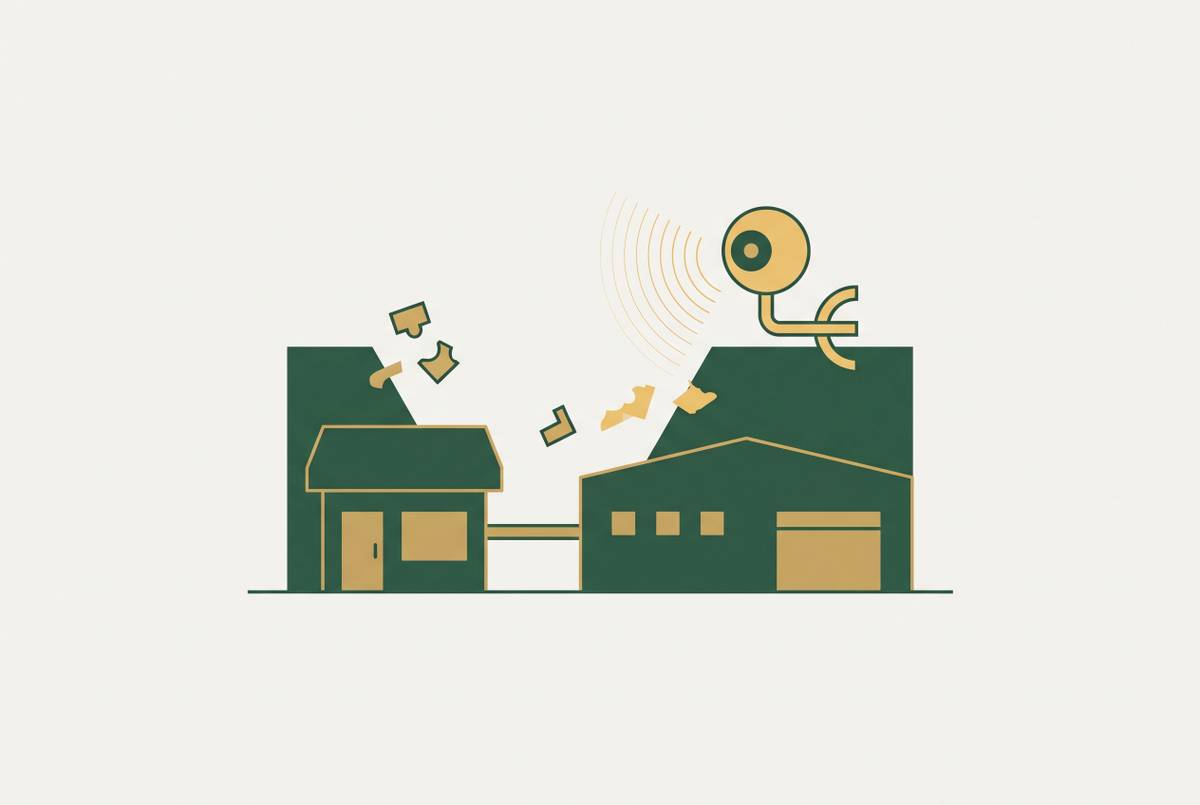
The icon, zone label, and contract line item stay in place after a camera is silenced. Those records describe the presence of equipment. In the coverage model at issue, maps, dashboards, and site diagrams do not distinguish a silenced feed from one whose alerts still receive attention. The representation outlasts the service it is supposed to represent.
A camera record is not proof of active oversight. When that record is treated as proof, silencing the camera does not trigger an exception, activate an alternate verification path, or start an SLA clock. The system continues to regard the zone as covered because the camera remains assigned to it. Nothing in that representation tells an operator that the path from detection to response has been interrupted. The missing function is concealed by an intact inventory.
This gap follows from recording coverage as a static arrangement of devices while delivering it through an active process of detection, assessment, and response. An operator working a legitimate incident in the zone has no reason, from the map alone, to question whether the feed is under active watch. The map says that protection exists where the monitoring process no longer supplies it. The site owner is left with a promise on paper after the service behind it has been withdrawn.
The distinction is between presence and performance. A camera can occupy its assigned place in the coverage record without contributing an alarm to the people responsible for responding. Counting that camera as protection confuses installed equipment with a functioning service. Once those two states look identical, the coverage record cannot reveal the very exception that most needs attention.
How the queue turns a silenced camera into a missed incident
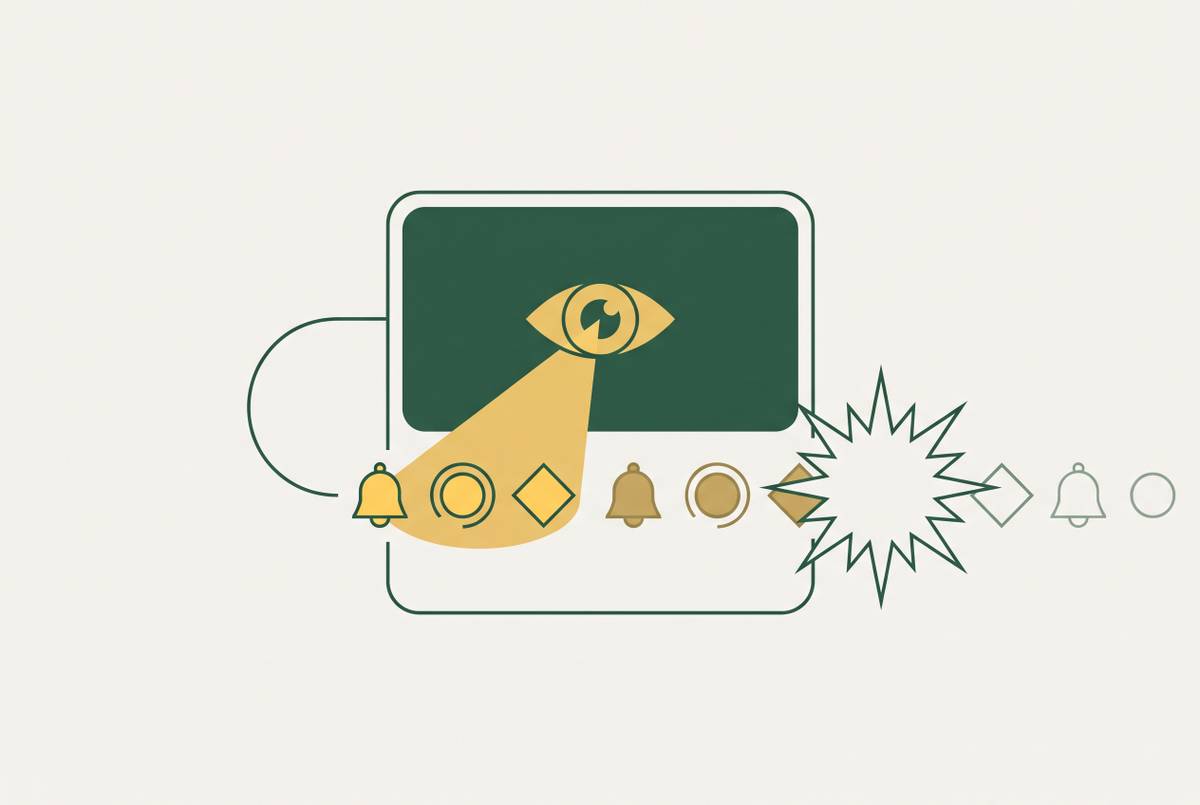
An unmuted camera still faces another constraint after detection. Its alarm enters a response process in which real events compete with routine noise for human attention. Monitoring feeds produce signals continuously, while operator triage capacity is set by headcount. Signal volume can rise without a corresponding increase in the people available to assess it. The way the system is built creates that backlog even when operators do their work with care.
The queue makes that mismatch consequential for real incidents. If every activation requires human assessment before its significance is known, an operator must spend time on environmental noise to discover that it is noise. A genuine threat waits within the same workload. The gap between signal volume and triage bandwidth is a failure mode that the coverage contract has not priced into its promise. The number of cameras alone cannot show whether the response process can handle all the alerts they send.
A threat in a silenced zone does not wait behind false alarms because its detection never becomes a queue entry. Yet the coverage map preserves the appearance that both detection and handling are functioning. The static record therefore hides two missing steps in a process that was already constrained by noise.
This is why restoring notifications alone would not resolve the underlying problem. It would restore the possibility of an alarm reaching the queue, but not remove the workload that made silence attractive. A sustainable architecture has to address both failures. The system must keep detection working across the covered area while keeping routine noise from taking up the attention people need to respond.
Why verified response makes the muted-camera gap a liability, not just an inconvenience
Research compiled for the U.S. Department of Justice found that the vast majority of police responses to burglar alarm activations are false. A dispatch supported by evidence of a threat differs from an unconfirmed activation that may have another harmless cause. Live monitoring earns its place in the response process by making that distinction before asking police to act. Muting removes the camera’s contribution to it.
Formal verified-response policy is not universal. Only a small fraction of U.S. law enforcement agencies have formally adopted it, and several that tried it reversed course. The Security Industry Association states that eleven agencies experimented with verified response and later rejected it after citizen complaints and concerns about crime. The value of verification therefore should not be confused with a claim that every agency requires it. Policy prevalence and the credibility of a particular dispatch are separate questions.
Where a silenced camera leaves an incident without video confirmation, the monitoring vendor cannot use that camera to substantiate the threat. Without another verification path, the dispatch loses its verified status, and response time and priority revert to the reactive baseline. The missing alert has now affected more than internal workflow. It has removed the evidence on which the monitoring service’s dispatch credibility depends.
The resulting liability concerns a promise as well as a delay. The coverage record represents protection in the zone, while the silenced camera cannot support the verification that gives that protection operational value. This exposes a gap between documented coverage and the service available when an incident demands action.
What would have to be true for muting to never be necessary
Instead of counting changed pixels, the system must classify moving regions as people, vehicles, animals, or environmental artifacts. Rain on a lens, headlights, and sensor noise then need not become threats simply because they alter the image. The system reduces noise through greater specificity while preserving its ability to notice activity.
Behavioral rules use that recognition along with what is happening and where. A forklift moving through a warehouse generates nothing, while a person crossing a virtual tripwire on a perimeter fence in the early hours generates a verified, timestamped alert. Object-level reasoning cuts false alarms to a fraction of the rate produced by pixel-change detection. That specificity also provides a basis for rebuilding operator trust in the alerts that remain.
Object recognition alone, however, cannot tell whether every person belongs on site. A cleaning crew arriving at 10 p.m. is human activity, but it is not necessarily an intrusion. The system needs site-specific context: schedules, who is allowed on site, and what usually happens there. The tenant who steps outside at 2 a.m. presents the same need to distinguish normal conduct from an anomaly. Without that context, generic rules return routine activity to the operator’s workload.
The necessary condition is correct classification without repeated human adjudication of predictable events. An AI agent with the relevant context can dismiss authorized activity and escalate a genuine threat while keeping the camera active. The noise must be resolved at the event level while the camera remains available to detect the next event.
Why AI reasoning alone does not close the gap — the human layer and what it actually does
AI triage does not replace accountable response judgment. Its role is to review every alarm, dismiss environmental noise and authorized activity, and surface verified threats for a human operator. The human remains responsible for interpreting the video, applying site knowledge, and exercising the authority to dispatch. Triage and response are complementary functions.
The description “an alarm comes in, they follow a set protocol” does not capture the judgment involved in video verification. An operator must understand what the images show against the background of what normally happens at that site. Experienced operators accumulate knowledge of regular occupants and routines, which helps them recognize departures from normal activity. A ruleset alone does not replicate that practical understanding.
The two layers therefore need context in different forms. The AI layer needs schedules, permissions, and patterns encoded so that predictable activity does not repeatedly become a human task. The human layer needs familiarity with the site in practice to assess the threats that reach it. AI processes concurrent alarms without placing each behind the limits of human attention. Operators then provide the verified, accountable judgment that supports police prioritization and site-owner trust.
The AI handles the noise that previously forced the mute, and the operator handles the escalated threat instead of searching for it among routine activations. No camera needs to be silenced to make that division of work possible. The camera’s place on the coverage map can then correspond to an active path from detection through judgment to response.
What security buyers should ask before trusting a coverage map
For security buyers, the lesson is to audit the conditions behind the camera icons. Buyers should ask what happens when a camera generates too many false alarms. If the answer is to raise thresholds, restrict zones, or silence the feed, the system still gets quiet by cutting coverage. Buyers should then ask how the system distinguishes environmental noise from human activity before an alert reaches an operator. Pixel-change detection exposes the muting risk, while object classification supplies a basis for resolving it.
The assessment should then follow the alarm-to-verified-threat path. Buyers should ask how that path works and how long it takes, rather than treating detection as the completion of monitoring. A model in which every alert reaches a human first still leaves alerts waiting for human review. Buyers should also ask which schedules, authorized personnel, and routine activities are encoded as site context. Even capable AI falls back on generic rules when it lacks the site knowledge to tell which activity is authorized.
The coverage record needs its own test. Buyers should ask what happens to a zone when a camera becomes unavailable or is silenced, including whether an exception fires or an alternate verification path activates. A map that keeps showing protection hides the change in how the service works. The relevant evidence is not the continued presence of the icon, but the response path still available behind it.
An AI-augmented remote video monitoring service answers these questions through its division of work. Every alarm passes through context-aware AI triage before human review, with noise dismissed and verified threats escalated to an accountable operator. The purchasing criterion is whether that architecture preserves detection without overwhelming the people responsible for action. A coverage map is trustworthy only when the monitoring process can deliver what its symbols promise.