Why Alarm Triage Order Determines Which Threats a Monitoring Center Never Sees
First-in, first-out queues bury real threats behind false alarms.
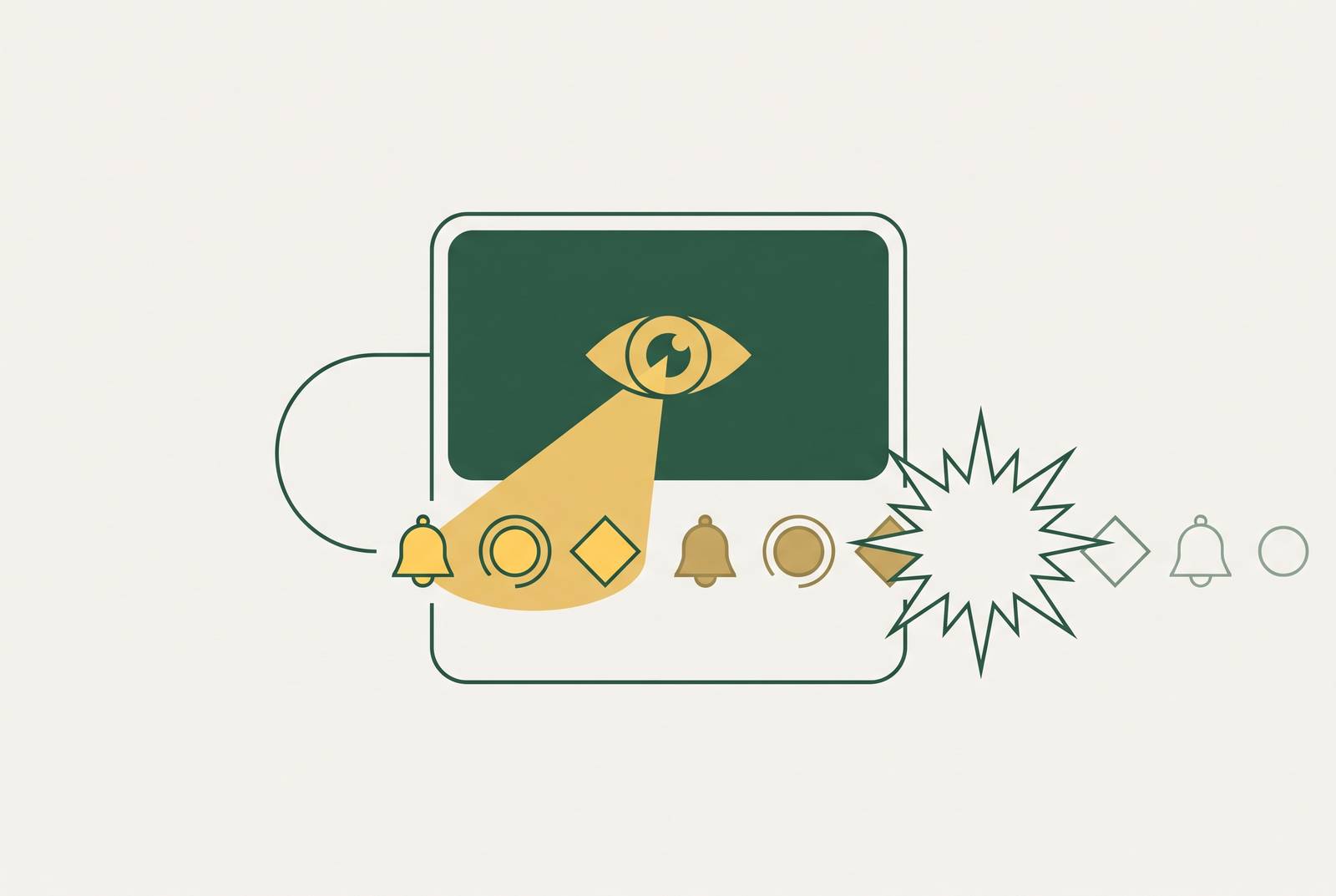
Alarm response time failure in traditional video monitoring centers begins when arrival order determines which alarms reach a human first. When more alarms arrive than operators can handle, real threats wait behind false alarms and can go unseen until it is too late to act. Preventing that failure requires assessing risk before assigning queue priority, correlating related signals, and directing human attention to verified threats.
How alarm queues work in a traditional monitoring center
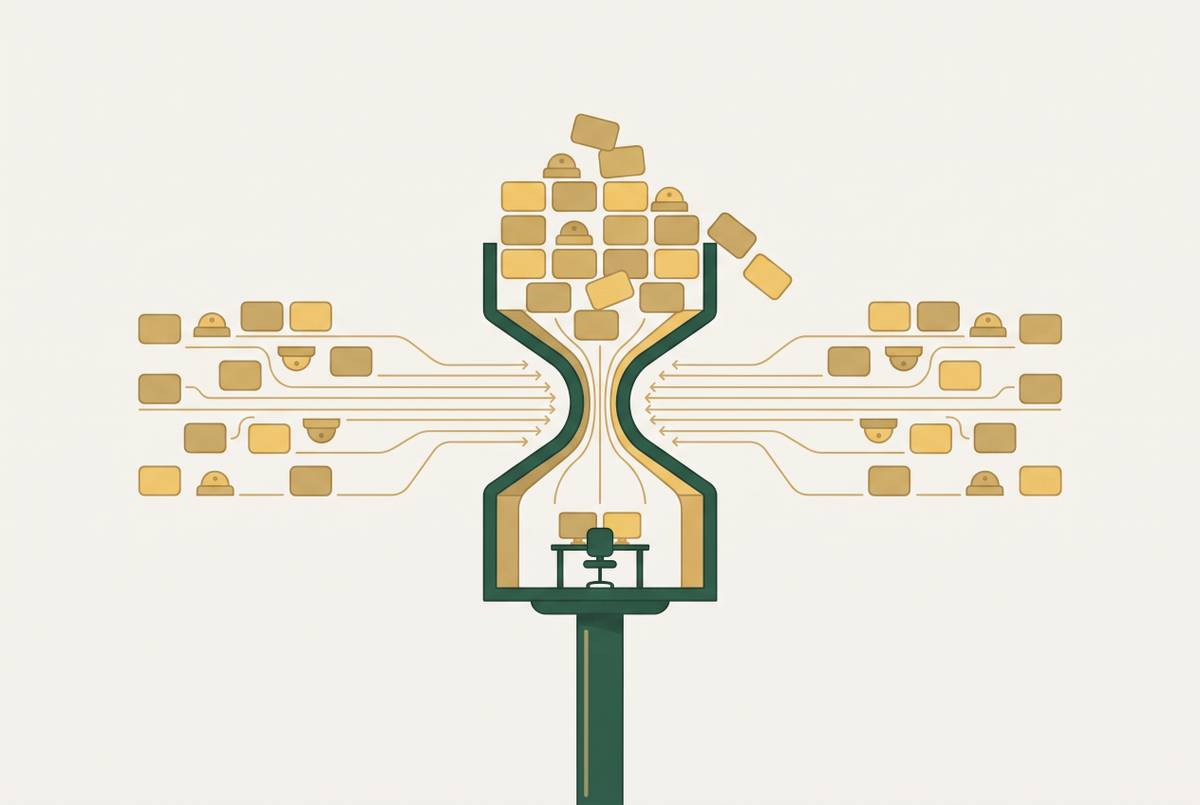
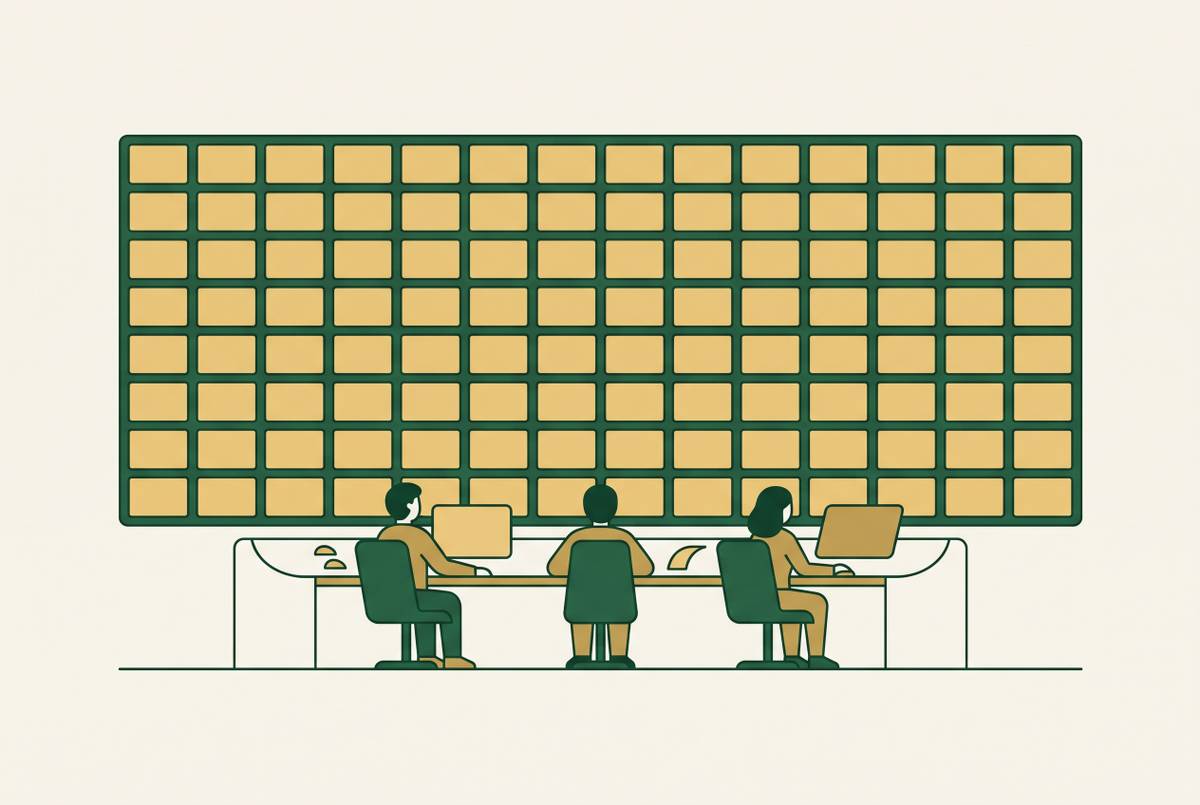
Traditional monitoring centers receive alarms in a shared queue and assign them to operators in the order they arrive. Each operator works one alarm at a time, retrieving the site record, assessing the signal, and deciding whether to call, dispatch, or dismiss. That work occupies the operator until the alarm has been handled. The next alarm then takes its turn. This first-in, first-out model, usually shortened to FIFO, makes arrival time the basis of assignment.
Operators can handle a fixed amount of work in a given shift, but the number of alarms that arrive can change. When arrivals exceed the rate at which operators complete reviews, the queue holds the excess. Events wait regardless of what they represent. Within this structure, there is no native mechanism to promote a high-severity event that arrived second ahead of a low-severity event that arrived first. An operator can assess the event’s significance once it reaches review, but that assessment does not determine its initial place. Queue position is set at arrival, before anyone assesses what the alarm actually is.
Why false alarms are not just noise — they are the load that collapses the queue
The ASU Center for Problem-Oriented Policing has compiled research finding that the vast majority of police responses to burglar alarms concern false activations, with some jurisdictions reporting even higher rates. For a monitoring center, each false activation still consumes the time needed to retrieve context, assess the signal, and decide what to do. Each of these reviews makes the real events behind it wait longer. At high volume, false-alarm processing becomes the queue’s main activity.
Pittsburgh’s 2024 adoption of tiered verified response followed thousands of alarm calls in 2023 that produced only 39 actionable reports. Unproductive responses dominated almost the entire alarm workload. That imbalance explains why staffing alone cannot resolve arrival-order triage’s central weakness. Doubling staff doubles capacity, but with the false-alarm ratio unchanged, it reduces the waiting burden proportionally rather than removing the need for genuine threats to wait behind noise. Low-value work competes for the same attention as an active threat, on equal terms.
Why do monitoring centers fall behind on real threats during volume peaks?
A genuine threat entering a full FIFO queue receives no preference because it is genuine. To the queue, an armed intruder and a wind-triggered door contact are structurally identical. The operator has not yet assessed either event. If false alarms continue to occupy available capacity, the threat waits behind work that may not clear before the incident ends. An assurance that it will eventually receive review says nothing about whether someone will see it while intervention remains possible.
Physical security makes that distinction consequential. A retail theft, a vehicle intrusion on a truck yard, or a break-in at an industrial facility unfolds in minutes. A queue delay of 20-plus minutes can leave an operator reviewing a completed incident. The signal arrived, but actionable attention did not.
The log can still look entirely orderly. The alarm was received, entered the queue, and eventually reached an operator, so the record shows a delayed alarm. Traditional reporting does not distinguish between “reviewed in time to intervene” and “reviewed after the fact.” Both appear as processed alarms.
How analyst desensitization makes the blind spot permanent
Delay is only the first effect of prolonged false-alarm exposure. Repetition also changes how operators approach the alarms they finally reach. When most signals in a category prove false, operators can develop category-level distrust and begin closing those alarms faster. Informal shortcuts displace the full verification protocol. What looks like efficiency during routine camera alarm review can become a missed escalation when a genuine threat appears in the same category.
That learned response does not reset with the next alarm. The fatigue dynamic applies to physical monitoring just as it does to other high-volume alert queues, because repeated unproductive review trains attention toward dismissal. A real threat can therefore suffer two distinct disadvantages, waiting longer to reach a human and then receiving less disciplined scrutiny. The second compounds the first. Faster handling is not an improvement if the speed comes from weakened verification.
Differences between shifts make the problem harder to manage. When the outcome depends on which operator receives an alarm, triage becomes a collection of individual habits. Those habits form under pressure to clear noise. The queue’s blind spot persists because the operators’ adaptation to its workload reinforces the same bias that delayed the threat.
Why low-fidelity signals in sequence are harder to catch than single high-fidelity alerts
Some threats are hard to spot even when someone reviews every alarm. A perimeter sensor trip, followed by motion on a loading dock camera and then a door contact on a secondary exit, can form a confirmed intrusion pattern. When each event is reviewed on its own, it may be dismissed as a likely false alarm. The sequence changes the meaning of the signals. Its strength comes from their relationship across time and across the site.
FIFO review does not assemble that relationship by itself. An operator must remember an earlier alarm or check it against the site log by hand, neither of which is likely when many alarms arrive. If each review treats the current signal as independent, the context needed to interpret the sequence falls outside the task. Processing all the alarms is therefore insufficient. The system can record that every alarm was reviewed while still missing the intrusion they reveal together.
A workflow organized around isolated events creates a structural gap by asking the operator to supply correlation that the architecture does not provide. It also shows why reducing review time alone cannot resolve the problem.
How verified-response policies expose what the queue has always been hiding
Salt Lake City adopted verified response in 2000 and saw an immediate, sharp drop in alarm responses. The policy established that an unverified alarm would not receive priority dispatch, regardless of how serious the underlying event might be. Verification became a condition of response. For a monitoring center, that condition makes the time spent establishing what happened part of the intervention window.
Seattle moved to full non-response to unverified alarms in 2024, with approximately two weeks’ notice. Centers operating arrival-order queues could no longer rely on police response to an unverified signal as a backstop. Their internal review speed became decisive. Pittsburgh’s tiered policy in the same year followed the near-total dominance of unproductive alarm calls described earlier. Its change likewise made verification central to the response decision.
The pattern extends from 2000 to the two policy changes in 2024. Verified response is not a new idea or an isolated exception, but an institutional reaction to the documented burden of false alarms. These policies expose the consequence of delaying verification. A threat buried behind noise now encounters a formal response condition that cannot be satisfied merely by showing that the alarm was received.
What it takes for an AI agent to reason about an alarm rather than just receive it
Prioritizing alarms by content and context requires assessing both before assigning queue priority. An agentic AI system perceives its environment, makes decisions, and performs multi-step tasks. In monitoring, that reasoning includes receiving the signal, gathering site context, and determining what kind of event is being reported before human review. Moving raw alarms into a differently named queue does not provide it.
Rule-based automation can flag a motion event without working out what it means. An agent needs to distinguish an authorized employee on a known schedule, a recognized vehicle on a permitted lot, and an unrecognized person at 2 a.m. Site knowledge makes those distinctions possible. Schedules, patterns of authorized activity, and the layout of cameras help show what the signal means, and correlation links it to other events. Without that context, the system injects raw motion events into the shared queue much as a legacy workflow does.
Alarm type must also govern the response path. Panic and holdup alarms require immediate human escalation regardless of verification, while intrusion alarms require verification protocols because of their high false-alarm rates. Fire alarms fall under NFPA 72 and must be reported at once. A reasoning layer must apply the appropriate protocol rather than subject every alarm to a generic filtering step.
For events subject to verification, this architecture shifts human work from feed-based scanning to event-based attention. The operator receives verified, classified events rather than a continuous stream of raw signals, while mandatory immediate escalations retain their required path. Filtering can let one trained operator do work that would otherwise keep several operators busy with FIFO reviews.
Why the human operator's role becomes more consequential, not less, in an AI-first workflow
Removing false-alarm processing from the human workload concentrates judgment on response under time pressure. In a legacy queue, most operator work consists of dismissing false alarms, while consequential decisions arrive amid fatigue and desensitization. In an AI-filtered workflow, a reasoning layer has already checked the verified threats. The operator’s task shifts from establishing whether an intrusion signal is real to deciding what to do about the confirmed event, with immediate-escalation alarm types handled under their own protocols.
That shift raises the demands on operator training. The operator needs to know the site and the escalation paths well and be able to act in the short time available. Queue-clearing speed is no substitute for those capabilities. AI agents provide continuous, scalable attention, while trained people provide contextual judgment and accountable response that an autonomous system should not replace. The layers are complementary because they address different parts of the failure.
The appropriate measure is speed to a verified threat. Faster, better escalation shows that the architecture has improved when noise no longer decides what gets a human’s attention. The operator's value increases precisely because that attention is no longer diluted. Verdun, a monitoring center built around AI agents and trained human operators, has argued that the alarm queue itself is the root failure of legacy monitoring.
What monitoring buyers should actually ask about triage order
For buyers, the practical test is whether a center can explain how a threat reaches an authorized person under peak load. Capacity claims are not enough to establish that. Buyers should first ask what happens to an alarm arriving during a volume spike, including whether it enters a shared queue and what determines when it reaches a human. An inability to describe a risk-based priority mechanism leaves no basis for treating the workflow as anything other than FIFO.
Buyers should ask what share of alarms reaching operators are dismissed as false and how that share changes at peak hours. A center that cannot answer cannot see how well its own queue works. Buyers should also ask whether the system correlates signals across a site and across time, or reviews each alarm in isolation.
The final question concerns documented time from alarm receipt to verified escalation to a human operator. Average review time does not answer that question. The relevant interval is how long a confirmed threat waits before someone with authority to act sees it. More operators show how much work a center can handle, while verified-event routing and protocol-specific escalation show how it decides what gets attention. For a buyer evaluating response promises, the decisive evidence is whether the architecture gives an active threat priority before its intervention window closes.