The Site Risk Profile That Quietly Degrades Every Time an Operator Mutes a Camera
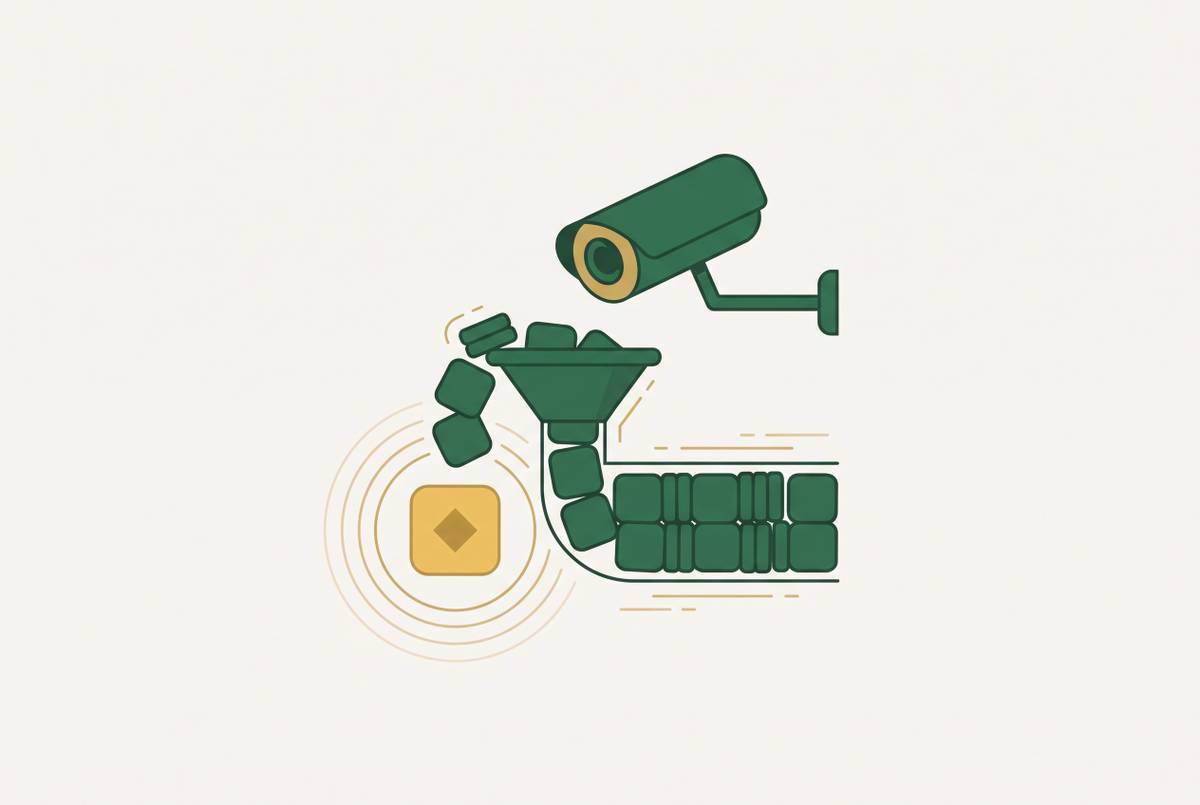
Muting cameras clears the queue but leaves hidden blind spots.
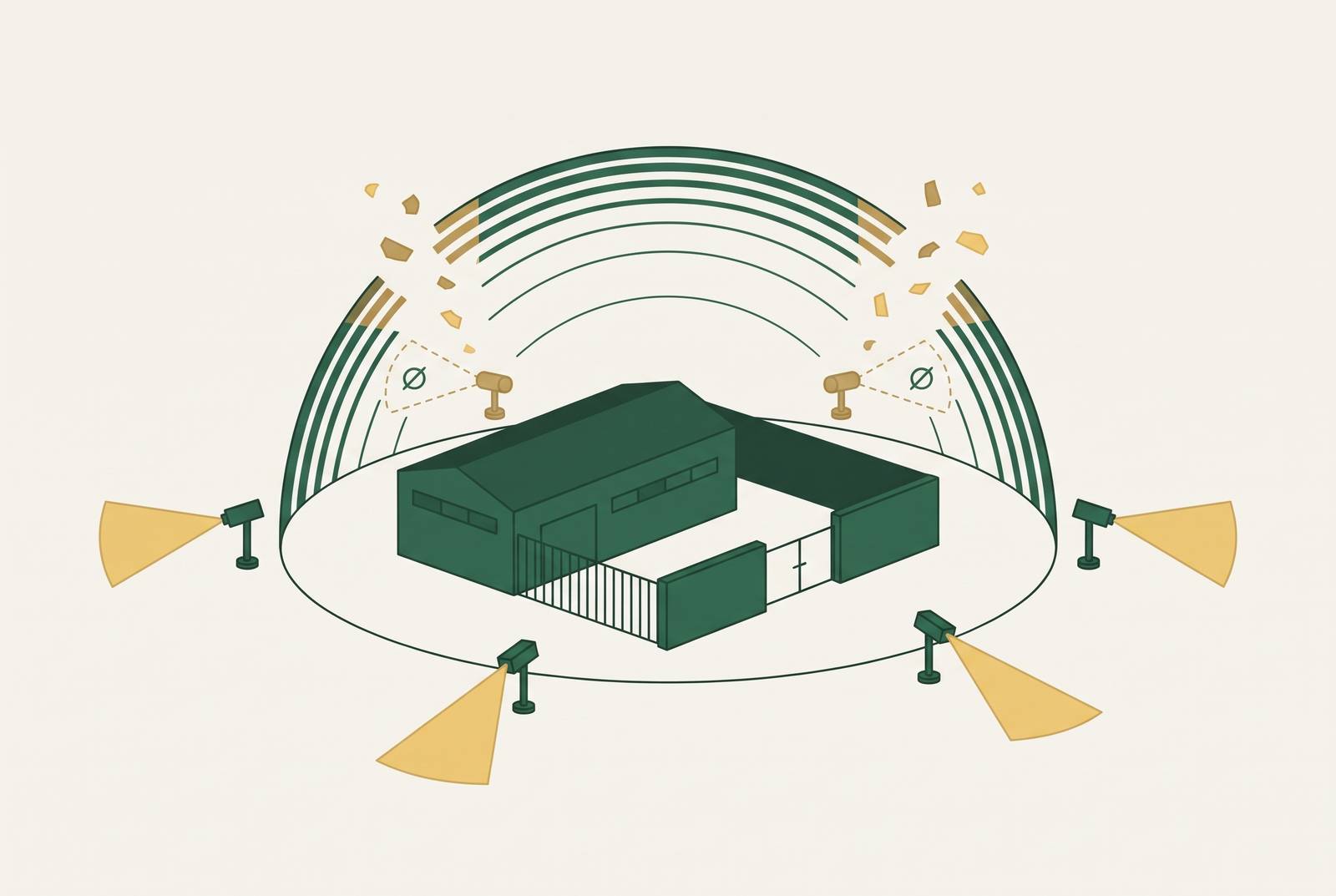
Muting noisy cameras is not a monitoring solution because it removes alerts without resolving the activity that produces them. Each unreversed suppression trades immediate queue relief for a lasting blind spot, often without recording the loss of coverage. The site risk profile then degrades while quieter alarm reports suggest improvement. The remedy is an architecture that resolves routine activity before it consumes human attention, supported by an audit of coverage already lost.
How the alarm queue became a system that rewards silence over resolution
The traditional alarm queue is part of a relay model whose economics depend on volume alone. A sensor trips, a signal reaches the central station, and an operator calls the premises before dispatching or ignoring the alarm. Scaling that chain from sites with a handful of cameras to dozens or hundreds exceeds its original design. Its purpose was to absorb incoming signals. As camera counts grow, the same structure makes humans responsible for separating routine activity from threats at a scale it was not designed to handle.
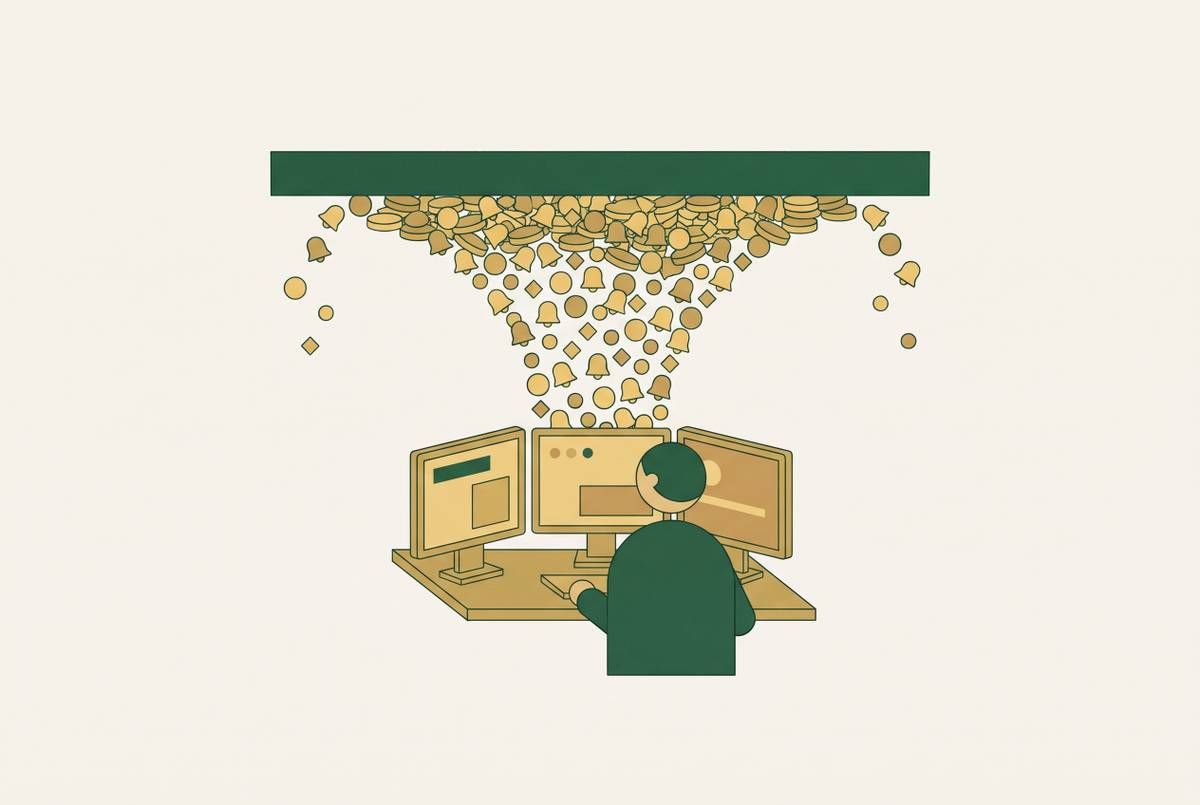
ASU/DOJ problem-oriented policing research identifies false alarms as the overwhelming majority of police responses to burglar alarm activations. LAPD historically reported more than a hundred thousand alarm calls a year, nearly all false, although more recent volumes are lower. Chicago’s hundreds of thousands of annual activations illustrate the same imbalance at greater scale. Noise is therefore the operating condition. With one operator covering dozens of sites and thousands of events per shift, clearing signals becomes the way to show progress in the moment, even when it does nothing to improve threat detection.
What fatigue does to an operator before they ever reach for the mute button
High-volume, low-context alerting degrades the attention needed to interpret it. Repeated false alarms create fatigue, fatigue produces small misses, and those misses weaken performance as new alarms arrive. The damage begins before any camera is silenced. An operator who has repeatedly dismissed routine activity from one camera begins treating that camera as inherently unreliable, rather than assessing each new event on its own evidence. The camera’s history substitutes for analysis of what it shows now.
Burnout and turnover deepen that loss of judgment by stripping away site knowledge. Familiarity with normal traffic, occupancy, and activity helps an experienced operator recognize an anomaly that a detection system cannot flag. Frequent staff changes prevent that familiarity from taking root. Adding cameras without improving alert quality accelerates the process because it increases the volume that the remaining attention must absorb. By the time an operator reaches for the mute button, the system has already impaired the person expected to compensate for its weaknesses.
Why muting noisy cameras is not a monitoring solution
For the fatigued operator, silencing a camera can look like responsible resource allocation. A feed producing false alarm after false alarm consumes attention that could go to a genuine threat elsewhere. The relief is immediate and easy to see. The corresponding loss is not, because the camera’s zone drops out of active alarm handling without necessarily appearing as a coverage gap in the administrative record. What looks locally like a noise fix transfers risk from the queue to the site’s physical footprint.
That transfer becomes effectively permanent when suppression has no expiration, review, or dependable route back into service. The camera need not stop recording for its monitored coverage to disappear. A retained image is not an attended alarm. The site manager sees fewer interruptions and the security director sees cleaner reports, but neither may see that a zone no longer gets a response. The asymmetry is decisive because the benefit is visible at once, while the cost remains concealed until activity in that zone requires attention.
A system that flags motion, people, or vehicles cannot, on that basis alone, distinguish a threat from a cashier, delivery, or shadow. Those distinctions require more than an object label. Object detection asks whether a person is present, whereas anomaly detection asks whether the behavior is unusual for that zone at that time. When that distinction never reaches the queue, suppressing the entire camera becomes the operator’s substitute for the reasoning the system cannot perform.
How one muted camera becomes a compounding pattern across a site
A camera is a node in a coverage network. Overlapping sight lines let adjacent cameras corroborate activity, so muting a perimeter camera removes both its own alerts and part of the cross-verification available from its neighbors. As further cameras are muted over weeks and months, the remaining feeds bear a disproportionate share of monitoring responsibility. Already-fatigued operators must then interpret those feeds with less supporting context, making further suppression more likely.
This pattern tends to build up in loading docks, parking lots, and entry points, where heavy traffic and activity that is hard to judge set off alarms again and again. Those are also zones where behavioral anomalies can precede a serious event. Quiet reports can therefore conceal concentrated exposure. Alarm counts, response times, and incident logs can all look better after suppression, while the camera map still shows coverage that the monitoring operation no longer gives the site. An organized threat actor observing or testing the site may discover the discrepancy through the absence of warnings, responses, or visible attention.
What finds the gap — the event types that exploit degraded coverage
Organized retail crime groups use reconnaissance that can look like the routine activity an overloaded queue teaches operators to dismiss. Loitering for long periods in high-value sections, visiting repeatedly within a short time, and watching where cameras are placed can show that someone is preparing for a theft before any stealing begins. The distinction depends on behavior over time. An experienced operator can recognize that preparation and issue a PA deterrent, but only while the relevant camera remains active in the monitoring process.
The same problem extends beyond a single store because organized groups work across regions. Monitoring more than one location can show the same vehicle or person at different sites, revealing links between visits that seemed unrelated. A missing feed weakens that larger pattern. When theft brings staff into a physical confrontation, losing the reconnaissance window also means losing a chance to act before people are in direct danger. The gap is therefore more consequential than an incomplete record of merchandise loss.
Truck yards and cargo sites face a similar risk because cargo theft requires access over time, which a muted perimeter camera makes easier. Those who cause the most harm spend time preparing to act, when behavioral monitoring could tell that preparation apart from ordinary movement. That window also has evidentiary value. The Combating Organized Retail Crime Act passed the U.S. House 348–60 in May 2026 and was pending Senate action as of that date. Its proposed aggregation of theft values across incidents and state lines would make timestamped, cross-location video documentation more directly valuable to loss prevention teams.
Why the standard workarounds — overage fees, offshore seats, more cameras — don't reverse the degradation
Overage fees respond to the real cost of processing excessive alarms, but they turn suppression into an explicit financial incentive. A noisy camera now consumes both operator attention and the client’s budget. Muting it relieves both pressures at once. Yet the fee leaves both the detection logic and the activity that set off the alarms unchanged. It rewards a reduction in billable events without establishing whether that reduction came from better discrimination or less coverage.
Adding lower-cost offshore operators responds to a different pressure, namely the need to process more events within a constrained budget. More seats can absorb volume, but they do not improve the signal-to-noise ratio or automatically supply site-specific knowledge. More cameras have a parallel limitation. They can cover more of the site as planned while adding more alarms with little context, which drives fatigue and suppression. All three responses manage queue volume rather than correcting the accuracy problem that makes the volume unmanageable.
Verified-response policies provide an external example of the same distinction between a signal and evidence of a crime. After Salt Lake City’s adoption in 2000, other jurisdictions, including Los Angeles, moved to require visual or physical confirmation before police could be dispatched. That requirement changes what qualifies for a response. It does not, by itself, resolve routine activity inside the monitoring queue or restore suppressed coverage. The architectural question remains whether verification happens before noise consumes the human attention needed for a genuine event.
What a monitoring architecture looks like when it is designed to resolve alarms rather than absorb them
A resolution-oriented architecture places AI agents before the human queue rather than using people to review every detected motion or object. The agents monitor cameras continuously, interpret zone, time, behavior, and sequence, and resolve routine activity without escalation. Context becomes the basis for triage. A person in a waiting room is normal, while the same person in a restricted zone in the early hours can require intervention. That distinction needs a model of normal activity for each zone and reasoning across time.
Trained human operators remain responsible for ambiguous and high-stakes cases that AI cannot resolve with confidence. AI is not an exemption from verification. The design must account for its limits so that doubt about a case draws attention to it instead of being hidden by a claim of automated accuracy. The evaluation criteria are whether the system can explain what it detected and why, its actual false-positive rate on footage from the site’s conditions, and whether performance improves as it calibrates. An “AI” label answers none of those questions.
Instead of requiring an operator to review, verify, call, wait, and then continue, agents can monitor cameras simultaneously and contact multiple stakeholders in parallel. The proposed standard is a 90-second resolution window. Every alarm should reach a human or be resolved within that period, because a real threat stranded at position 20 in a queue has already exposed an architectural failure. This design requirement leaves actual compliance to be demonstrated.
An agent calibrated to lighting, traffic, and normal occupancy by zone and hour can retain contextual knowledge without depending on one operator’s tenure. That knowledge still needs to be tested against conditions at the site. The system should send people events that need their judgment and keep interpreting routine activity, with notifications from difficult cameras left on. In that model, quiet is the result of resolution while coverage remains active.
How a buyer audits their own site's current coverage degradation before the next event finds it
For a buyer, the practical next step is an audit that starts with the alarm log. Identify cameras that have generated zero alarms over recent weeks and months, then establish whether their zones were genuinely inactive or their events were suppressed or bulk-dismissed. Silence alone proves neither coverage nor safety. Reconstructing those histories shows where the current operation processes less than the installed system should monitor.
Map suppressed and chronically low-volume cameras against loading docks, parking lots, entry points, and cash areas. Where quiet cameras cover high-risk zones, the suppression that has built up needs review. Then test the behavioral threshold with controlled activity. Send a staff member to linger in a covered zone and establish whether, when the system detects a person, it distinguishes lingering from passing through.
Ask the provider how many cameras are currently muted or suppressed, what triggered each decision, and how coverage is reviewed and reinstated. If those questions cannot be answered, the provider cannot account for the site’s current coverage state. Make that review a recurring operational task. A quarterly comparison of active and suppressed cameras against the site risk profile interrupts the accumulation that routine alarm reporting can hide.
The audit requires each coverage reduction to become an explicit decision, with its reason and consequences documented, allowing suppressions concerning genuinely irrelevant zones to remain in place. The trade can then be assessed deliberately. Easing the queue should no longer shape the site’s risk profile by accident.