Why the Queue Is Always Full Before the Incident That Matters Most
Pixel-based alerts bury real threats, and only triage fixes it.
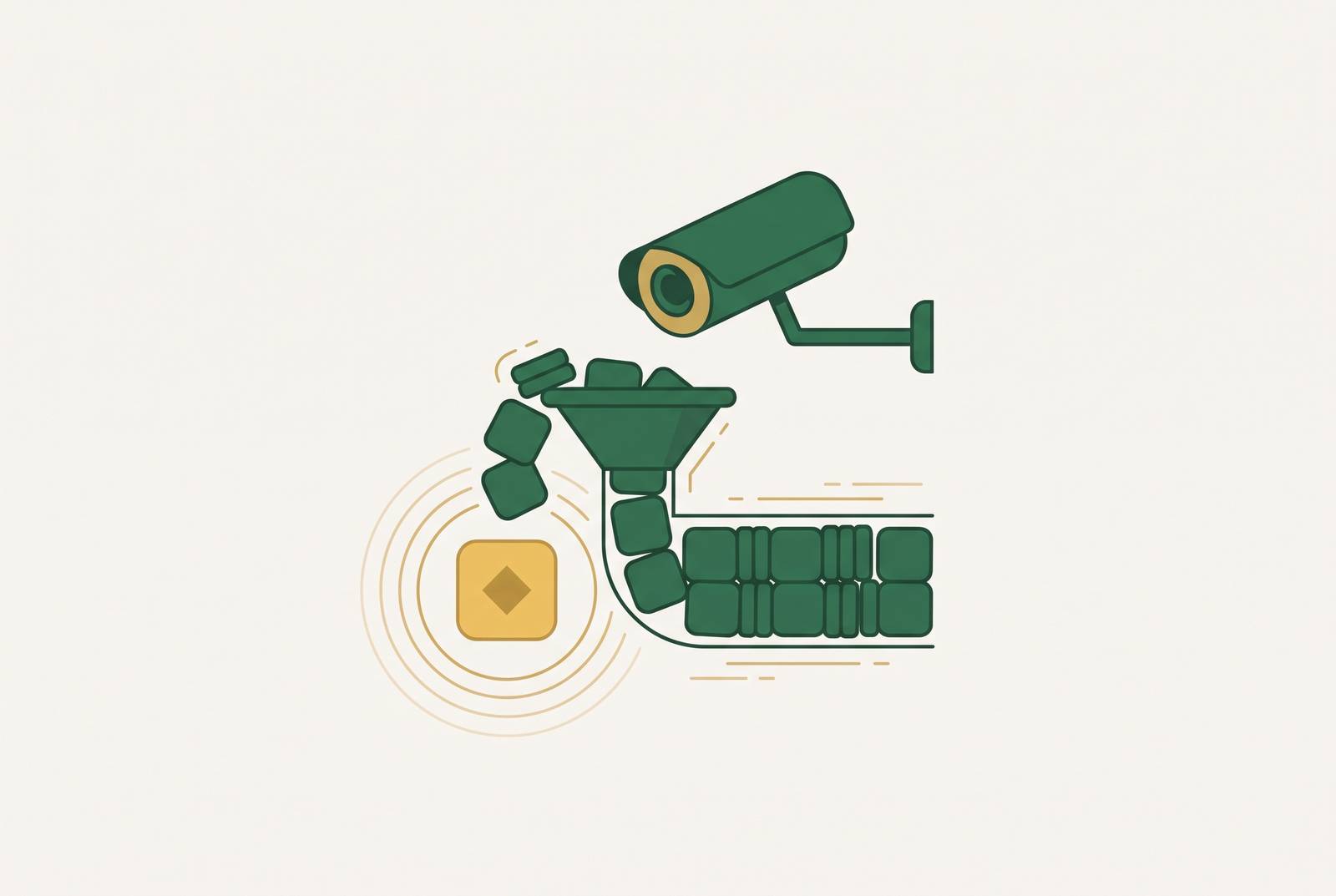
In traditional video monitoring centers, alarm response time starts to fail before an incident occurs. Pixel-based detection generates routine alerts faster than operators can review them, so real threats enter an existing backlog. The queue itself becomes the hazard, and the structural remedy is triage before human review.
How pixel-change detection generates more alarms than any human workflow can clear
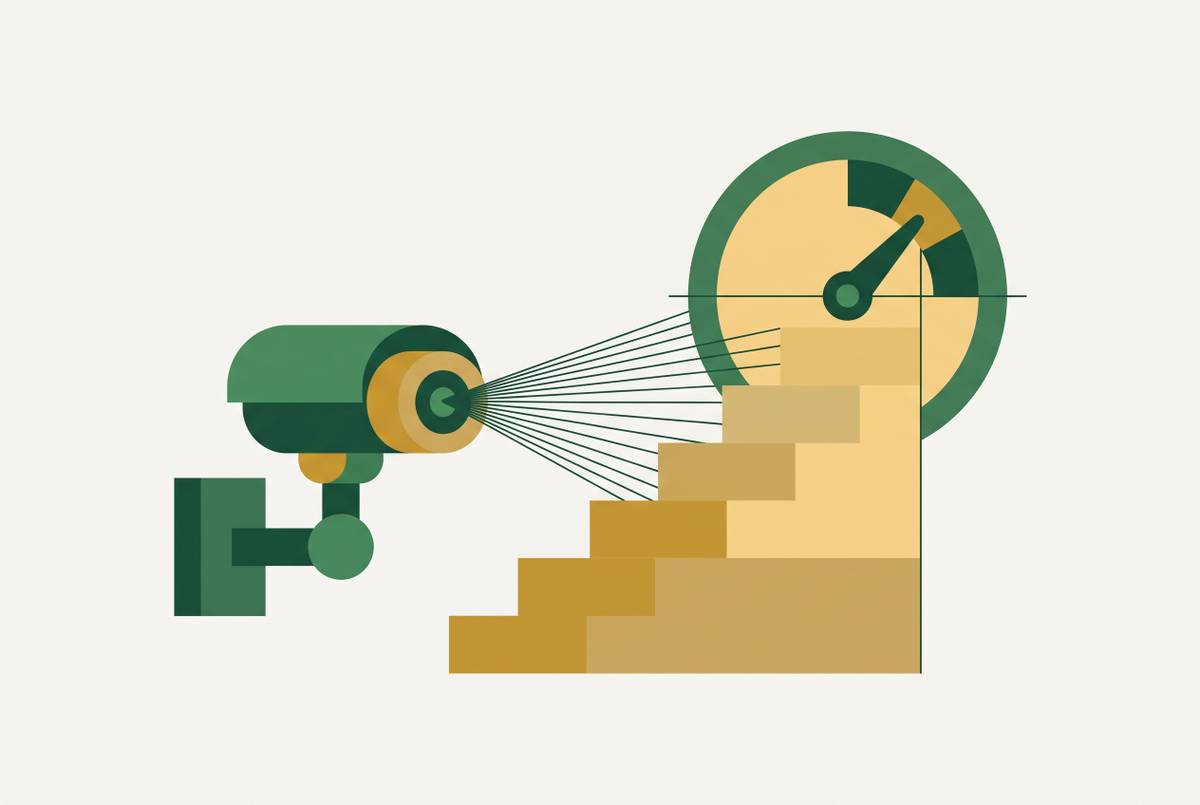
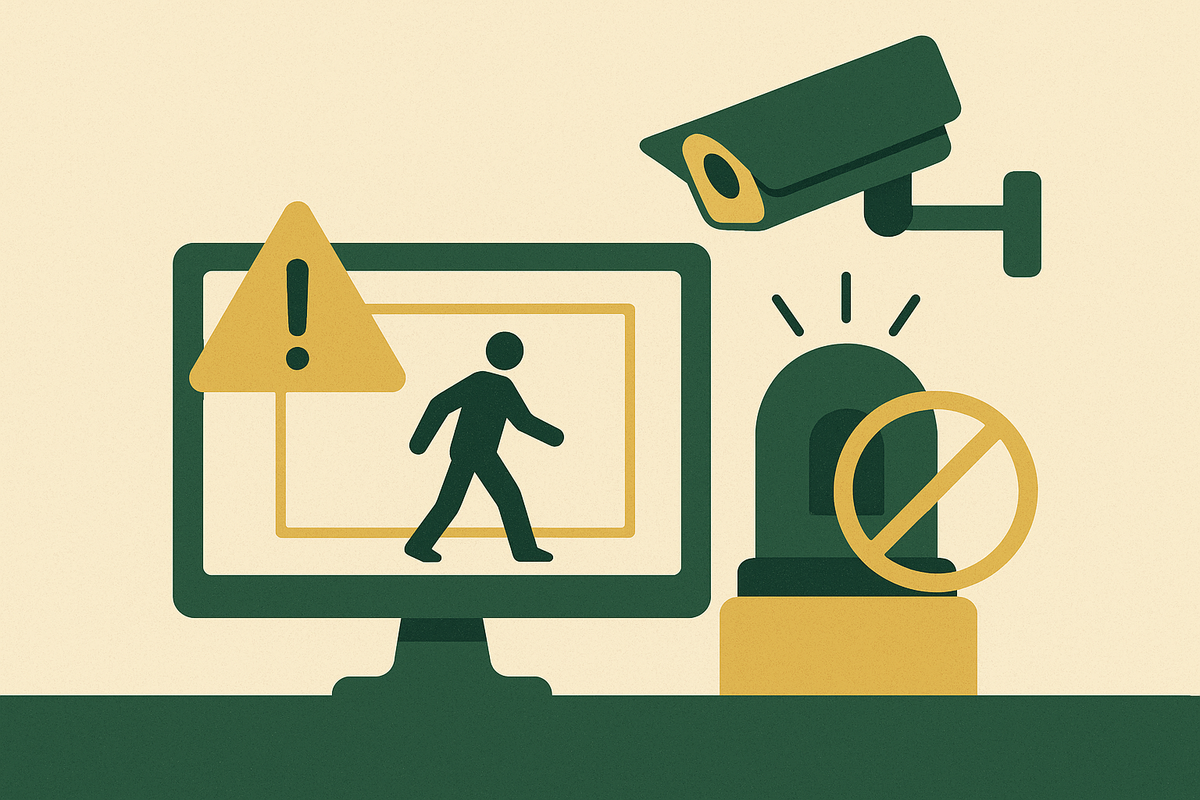
In a legacy video management system, motion detection counts pixel changes. It does not understand the scene producing them. A threat and a headlight bloom can therefore produce the same alert when each crosses the system’s threshold for change. Wind, rain on a lens, insects, passing vehicles, flickering lights, and routine deliveries all qualify.
That distinction limits what configuration can accomplish. Adjusting sensitivity changes how much movement triggers an alarm, but it cannot give a counting algorithm a concept of authorized activity or threatening behavior. This is an architectural constraint.
As more cameras are added, more views pick up environmental triggers, whether or not threats become more frequent. Industry monitoring data puts the potential workload for a single operator at 1,000–8,000 events per shift, overwhelmingly environmental artefacts. Quiet sites can still produce heavy workloads. A detector that treats ordinary visual change as a reason for human review generates demand according to activity in the image, independently of the capacity available to assess it.
Why do traditional video monitoring centers fall behind before an incident arrives?
Continuous arrivals mean the backlog develops during routine conditions. By the time an intrusion, theft, or access event produces an alert, dozens or hundreds of environmental triggers may already be ahead of it. The incident simply takes its place in line. High-volume periods intensify that imbalance, but an actual security event is not necessary to create it.
Oversight Protection identifies queue depth as a determinant of the intervention window. Staffing shows how much work operators can review, while backlog shows how much work is already waiting for them. An alarm arriving at position 50 may remain unreviewed until an intruder has left or damage is complete. The delay consumes the opportunity to intervene.
This is the distinction between a late review and a lost response window. The same company describes the latter as a dead zone, where the queue still contains an event but timely intervention is no longer possible. Faster individual reviews cannot resolve a sustained excess of arrivals over processing capacity. Alarms age out operationally even while they remain available for review.
What a perpetually full queue does to the operator who has to work through it
Industry data on security operations center activity puts noise at 60–90% of alarms, creating an environment in which dismissing an alert as routine is usually correct. Habituation follows the pattern of the input.
The U.S. DOT literature review defines alarm fatigue through increased operator response time or a decreased response rate. This is not simply dissatisfaction with repetitive work. Exposure to false alarms can increase stress and slow reactions, adding a human processing penalty to the existing backlog. The system’s noise thus weakens the very review capacity on which it depends.
An operator who expects another raccoon alert may hesitate before escalating a real intrusion. That hesitation can consume the remaining intervention window. Cameras keep recording and the VMS keeps producing events, but the people who review them respond less to both. VideoraIQ’s detection guide identifies the resulting failure as a loss of trust in alerts.
The three workarounds monitoring centers use and why each one trades coverage for quiet
Muting noisy cameras is the first concession. It cuts incoming alerts at once, but takes those cameras out of active monitoring. Coverage maps may still show them as active even though their alerts are no longer reviewed. Oversight Protection notes that muting can also remove evidence needed for incident reconstruction. The blind spot can persist across shifts until an incident exposes it.
Raising detection thresholds is the second concession. Requiring more change before an alert fires suppresses environmental triggers, but also suppresses smaller, quieter, or partially occluded threats. VideoraIQ’s guide describes the resulting coverage gaps as a limit of detection without scene understanding, rather than a problem that further tuning can eliminate.
Offshoring operator seats is the third concession. It lowers labor cost per seat without reducing the events each operator must assess. The concession is continued acceptance of degraded review under saturation.
These choices make an overloaded service less costly or less visibly noisy, but none changes the source of the arrivals. Pixel-based detection continues producing events faster than people can clear them. The queue can therefore refill after the intervention.
How municipal penalties, insurer demands, and law enforcement policy are turning queue failure into liability
Municipal penalties make unnecessary dispatches a financial exposure, while verification policies in a growing number of cities may leave unverified alarms without a law enforcement response. A real incident passed through without verification can therefore fail at the dispatch stage as well as in the review queue.
Insurance requirements add a separate constraint on coverage workarounds. Protective safeguards endorsements can make an operational, centrally monitored alarm a condition of coverage, and failure to meet monitoring conditions can lead to denial of a theft claim. Complete monitoring logs are not a universal claim-processing requirement. Records nevertheless help establish what monitoring occurred, so a muted camera or an unreviewed alert can leave a significant gap when the service is examined.
The distinction is between an installed system and a demonstrably functioning monitoring service. Cameras alone do not establish that an alarm was assessed, contextualized, or escalated. A monitoring record also does not ensure that a claim will be paid. Insurers check whether the monitoring met the conditions of coverage, while police verification policies can require more than an alarm signal before officers are sent.
Where queue failure is most damaging at retail perimeters, parking lots, and truck yards
These constraints are especially consequential where the perimeter is the attack surface. In parking lots, exterior grounds, and loading areas, detection systems face environmental change, and crews have access for coordinated theft. A crew can reach a loading dock, complete a theft, and leave before its alert reaches an operator.
Recent declines in shoplifting incidents and retail merchandise theft have been attributed to deterrence investment, while organized schemes and cargo theft have grown. The risk moves toward the supply chain perimeter. For truck yards and distribution centers, sharply rising cargo theft losses make missed alerts consequential even when the site has extensive camera coverage.
License plate capture cannot support an immediate investigation while it remains buried in an unreviewed backlog. A recorded detail is not yet an investigative finding. Reviewing that detail in time links it to an incident.
The National Retail Federation states that the Combating Organized Retail Crime Act passed the U.S. House 348–60 in May 2026, and the bill now sits with the Senate. The Senate Judiciary Committee fact sheet describes provisions that, if enacted, would permit aggregation of theft values across incidents and state lines. That would increase the value of cross-location, timestamped documentation. Saturated queues make that documentation harder to produce reliably, even when the underlying footage exists.
Why object detection sold as AI does not resolve the queue problem
Adding object detection does not by itself close the gap between footage and a meaningful alarm. A classifier can identify a person, vehicle, or animal without understanding why it is present. Classification is not an assessment of authorization. A delivery driver arriving at a loading dock at 2 a.m. and an unauthorized intruder can generate the same person-class alert.
The missing distinction is behavioral and contextual. VideoraIQ’s guide separates object classification from the behavioral rules used to decide whether activity should trigger an alert. A person crossing a virtual tripwire in the early hours can warrant a verified alert, while a forklift in an authorized zone produces none. The object label alone cannot make that distinction.
The strongest objection is that AI analytics are already widely deployed and improving. However, the label covers very different capabilities. Products that append an object classifier to motion detection may still lack scene reasoning, behavioral analysis, and schedule-aware triage. They can classify more events while increasing operator workload and queue pressure.
That leaves the original bottleneck in place under a different name. The system supplies a more specific description of what appeared, but humans still have to assess its fit with authorized activity. More labels do not necessarily improve signal-to-noise performance. An AI designation is therefore not evidence that the system understands an event’s operational significance.
What triage before the human queue actually requires
AI agents evaluate alarms against site context, schedules, behavioral patterns, and object class, resolving ordinary activity automatically while escalating ambiguous or high-stakes events.
Oversight Protection describes this division as agents filtering alarms while humans decide whether to respond. Concurrent processing gives agents an operational advantage over a pool whose reviews are limited by human attention. Incoming alarms need not all wait for that attention before receiving an initial assessment.
Site context is essential to that distinction. Agents need a model of what is normal at the specific location, including schedules, authorized vehicles, and expected foot traffic patterns. Mere presence is not enough to justify escalation. Without those inputs, an agent risks identifying activity accurately but judging its significance poorly.
Human judgment remains necessary because agents have limits. They lack site-specific institutional knowledge, can make consequential errors, and cannot be held accountable in the same way as an operator. Oversight Protection says these limits are reasons to keep people in control of security decisions. In a human-on-the-loop model, agents handle volume while people retain the action gate for ambiguous or high-stakes cases.
Evaluation on clean, well-lit footage can overstate performance at night or under IR illumination, weather, occlusion, and motion blur. Field conditions are not incidental test complications. Marine layer, water glare, IR bloom, and mixed lighting belong among the tuning inputs, with lower-confidence conditions disclosed rather than concealed behind a uniform performance claim.
The resulting architecture protects the response window by protecting access to human judgment. Operators no longer have to review every routine trigger before reaching an event that requires a decision. Their role becomes deciding what action is justified. The relevant measure of upstream triage is whether consequential events reach a responsible person while intervention remains possible.