Clearing the Alert Queue Without Sending Work Offshore or Silencing a Feed
AI triage cuts alert noise while keeping every camera covered.

Muting noisy cameras is not a monitoring solution because it removes alerts from an area where the security risk still exists. Clearing an overflowing alert queue requires reducing noise without withdrawing coverage. AI-driven alarm review provides that alternative when it classifies every alarm, preserves uncertain events for human review, and routes threats to operators who can intervene.
Why alert queues overflow and what operators quietly do about it
Customers expect a monitored camera to produce a response when something requires attention. Operational reality can be quite different. A camera may stay connected while its alerts join a queue that operators cannot clear before the next wave arrives. The gap begins with a monitoring architecture that sends more signals to people than they can reasonably assess.
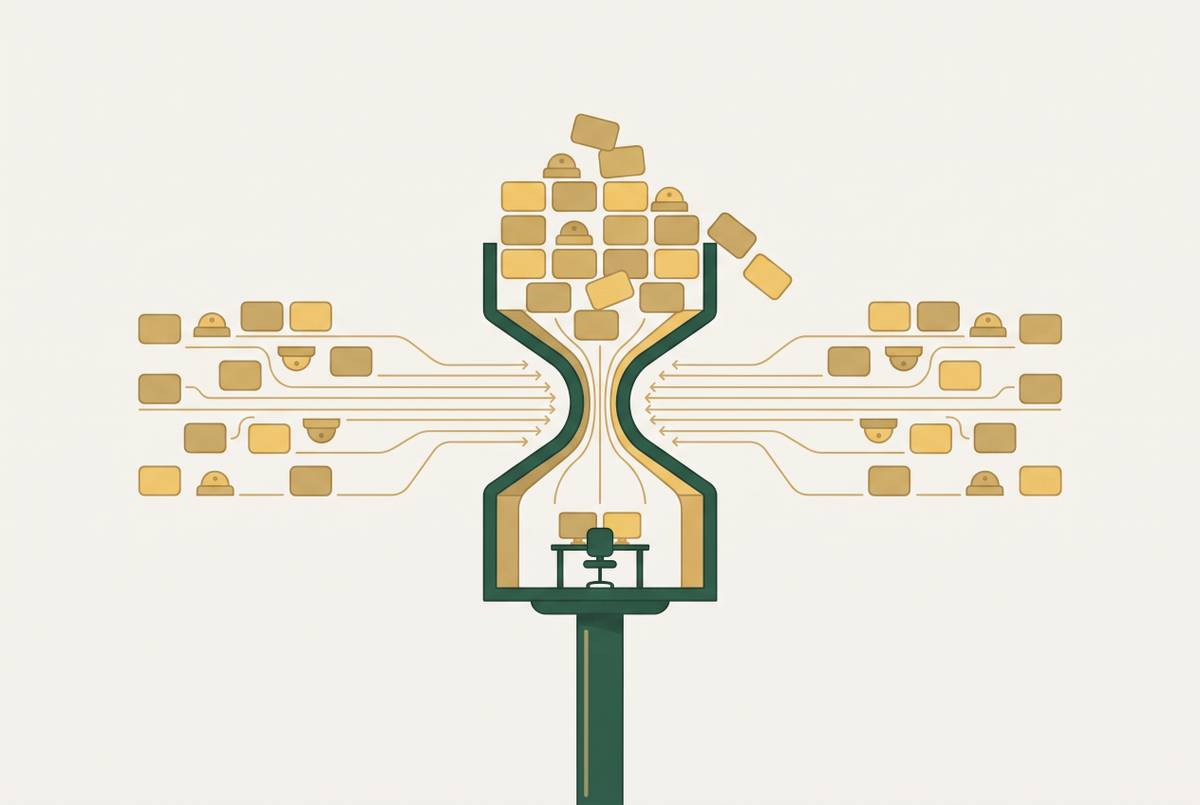
The legacy model is “detect and notify”. A sensor fires, a signal travels up the chain, and a human decides what it means. That model was designed for sites with a handful of cameras, rather than the dozens or hundreds found at a single commercial or industrial property today. When pixel changes repeatedly trigger alarms, rain, shadows, and routine activity compete with possible threats for the same attention. Unreviewed alerts do not simply wait their turn indefinitely. They age out or are silently skipped.
Feeds that fire all the time get less attention, while low-severity events go into batches that no one may ever review. Managers tolerate these habits because insisting on immediate review of everything does not make the workload achievable. Sorting alerts consumes the attention operators need to watch for threats. Customers, however, still understand monitoring to mean that someone will assess an event while a response can help.
Why muting noisy cameras or sending alerts offshore is not a monitoring solution
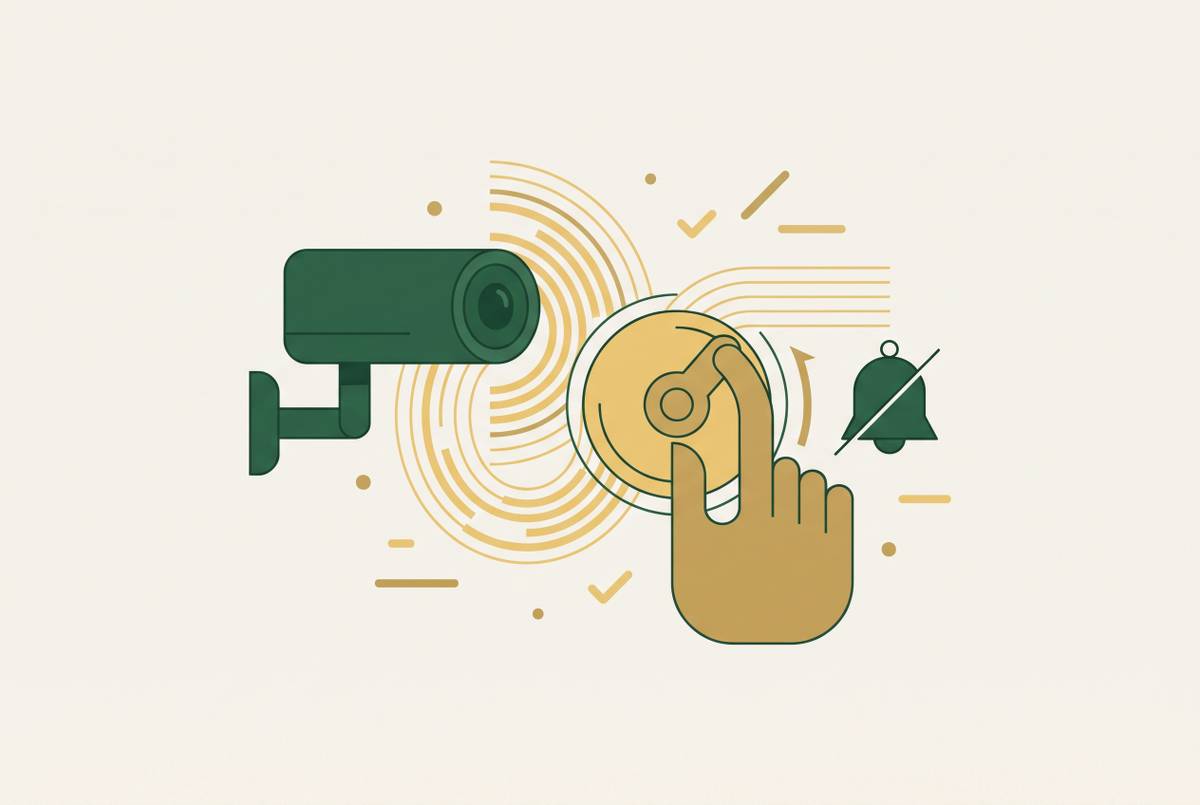
Silencing a noisy feed offers immediate relief. Muting notifications or lowering sensitivity for good shrinks the queue without another operator, so it is easy to see why someone would choose it in the short term. But the camera remains in the invoiced camera count while contributing less meaningful signal. Where notifications are muted, an incident can produce no alert, no alarm log, and no response, even though the camera remains live. A customer who has not been told about that change still believes the area is covered.
Sending overflow offshore preserves a route for alerts but can weaken the response chain. A distant call center usually gets short clips or stripped-down alert packets, but lacks knowledge of the site, a relationship with the customer, or the authority to act directly. Each hand-off between companies lengthens the alert-to-decision interval. That delay consumes time when a threat may still be stoppable. Distance and divided responsibility separate seeing an event from acting on it.
Both choices make the workload look smaller while the risk remains. They are rational pressure valves for an overloaded operation, but neither repairs the monitoring promise. Municipalities are also raising the consequences of inadequate verification through dispatch requirements and penalties for false or unverified alarms. A center that suppresses signals or passes context-poor clips onward can therefore face financial exposure as well as a loss of customer trust.
Why adding more operators does not solve the structural problem
Hiring addresses capacity, but not the composition of the queue. As the number of cameras grows from a handful to dozens or hundreds, hiring staff at the same rate gets hard to afford with thin monitoring margins and rising labor costs. Passing those costs to customers weakens competitiveness while leaving the noise intact. Human attention also has limits under sustained high-volume triage, as responses slow, small misses accumulate, and evidence-based review gives way to filtering by feel. Operators and their managers face a workload problem. More reviewers can distribute that workload, but they cannot change the ratio of genuine events to irrelevant triggers. The system must therefore cut down on what needs human attention before it reaches the human queue.
What AI triage at the front of the queue actually does
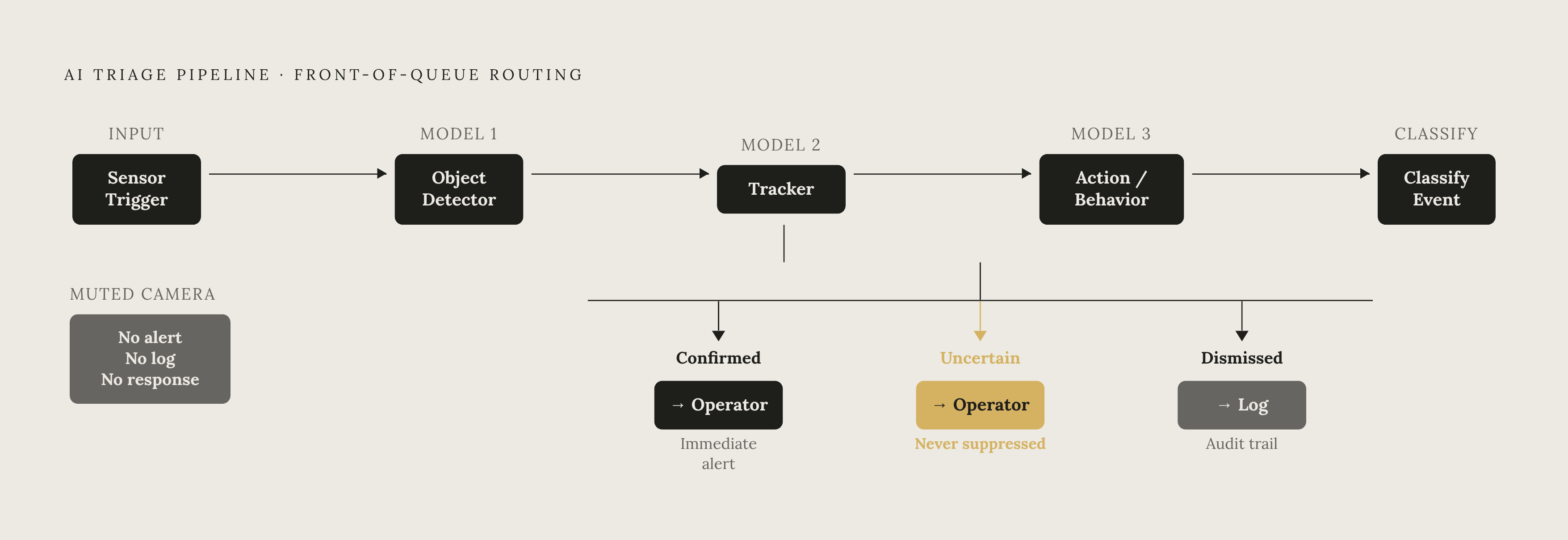
Front-of-queue AI changes the order of review. Instead of sending every sensor trigger directly to an operator, a vision-language model or multi-model pipeline examines the footage first. It describes what is visible and classifies the event as confirmed, dismissed, or uncertain. Those classifications decide which events go into the human queue. The AI is a filtration layer.
A multi-model pipeline splits up several jobs that basic motion detection cannot do. An object detector labels people, vehicles, and objects within frames, while a tracker keeps track of which ones are the same across frames. An action or behavior model then evaluates what is happening over time. The resulting event includes a class, confidence, timestamp, and camera ID alongside the raw motion flag.
A rule-based motion alarm can fire on rain, shadows, or swaying trees, while a behavioral model can distinguish environmental movement from activity that departs from learned normality. The review can classify unusual sequences and determine which visual changes require an operator’s attention.
Confirmed events go to a human immediately. Uncertain events also go to a human, while dismissed events are logged for auditability. The uncertain category is essential because ambiguity must not become a reason to suppress an alarm. This design checks events one at a time and keeps the feed in service, while muting a camera stops its alerts.
Why the AI layer must be paired with a human who can act, not just observe
Filtering completes only the first part of monitoring. The operator receiving a confirmed or uncertain event must have the information, tools, and authority to act while it unfolds. That can mean addressing an intruder through on-site speakers, dispatching police, or notifying the customer’s team without waiting for another company to take over. An operator limited to logging a ticket remains an observer.
Audio detects activity early and covers the whole space, while video gives a trained monitoring professional visual confirmation to check before emergency services are called. Verification requirements make that assessment operationally important as well as useful for limiting false dispatches. A sensor trigger passed through several systems is not equivalent to a verified event. The response process needs someone responsible for interpreting the evidence.
That person also needs more than a few frames. Continuous footage access and knowledge of what is normal at the site at that hour help an operator distinguish a threat from legitimate activity. Short, decontextualized clips recreate the information deficit of an overflow hand-off, even when AI selected them. The full system therefore puts filtration and a human response backed by that knowledge under one monitoring provider that is responsible for both. Neither component substitutes for the other.
How the system performs on the footage conditions that actually exist in the field
The ability to classify a clear daytime clip does not establish field reliability. Commercial and industrial monitoring includes darkness, weather, and partial occlusion, all of which can weaken the evidence available to computer vision. Moderate rain at night reduces contrast, obscures parts of the scene, and introduces motion blur. Fog also reduces contrast. Detection and classification can therefore degrade precisely when an operator needs the system to distinguish a person from environmental noise.
Infrared light can reflect off a window, producing false positives or masking people, depending on camera placement. Better classification does not make that optical problem disappear. A provider’s computer vision background is relevant because reliable monitoring requires understanding both the model and the footage it receives. A demonstration that avoids difficult conditions leaves this part of the service untested.
Weather-adaptive architectures offer an emerging mitigation. Newer transformer-based model families use weather-adaptive attention and domain adaptation to improve robustness rather than relying only on general-purpose detectors. Those approaches still need evaluation against the site’s conditions. For buyers, the practical consequence is to require full-IR night testing and partial-rain testing before acceptance. A demonstration in a sunny parking lot leaves suitability unproven when a provider cannot say how the system performs under those conditions.
What this means for integrators and dealers who want recurring revenue without building a central station
For integrators and dealers, the commercial question is whether video monitoring can become a recurring service without creating an entirely new operating business. Basic sensor monitoring generates recurring monthly revenue, but its margins are thin and subject to price pressure. Video verification can command a meaningfully higher recurring rate because it provides a more substantial service. The obstacle has been the central station. Staffing, certifying, and running one around the clock requires a capital and operational commitment that many regional dealers cannot make.
An AI-first monitoring provider offers a different division of work. The dealer’s camera installations feed a service that absorbs alarm volume through automated review and assigns actionable or uncertain events to trained operators. The monitoring provider runs the central station that supports the service, making its accountability part of the dealer’s product. The customer’s experience depends on who ultimately owns the response.
Recurring revenue also changes the role of analytics. When analytics are embedded in daily monitoring, they become an operational dependency. That can reduce churn and raise switching costs, helping protect the dealer’s recurring revenue base. The attraction is therefore not simply another charge attached to a camera sale. It is a service model in which ongoing monitoring supports the customer relationship without requiring the dealer to operate its own response center.
What to look for — and what to test — before switching monitoring providers
Buyers should begin with compatibility and the transfer process. Most alarm panels can be reprogrammed or fitted with a new communicator, while providers that ingest standard RTSP streams can use existing cameras. Replacement hardware is not automatically required. However, the previous dealer may need to release an existing communicator before the new provider can register it. Confirming that procedure and its timeline before setting a go-live date avoids treating a configuration change as though it has no dependencies.
The next test is whether the provider can describe measurable operating commitments. Ask how much false alarms have fallen against a pre-AI baseline, beyond the claim that the service uses AI. Ask what triggers escalation to human eyes, how rapidly real or uncertain events reach an operator, and how that threshold is enforced. The operator’s evidence should also be explicit. Continuous footage and site context are different from a short clip stripped of surrounding activity, just as one accountable entity is different from a chain of companies passing alerts onward.
Acceptance testing should expose the system to difficult footage. Full-IR night mode and conditions reflecting the actual site belong in that test alongside daytime or ideal lighting. The night-shift acceptance criterion should be at least 90% accuracy versus the daylight baseline. That relative performance requirement depends on establishing the baseline itself. A provider should also state how it handles misses and whether its performance commitments include financial accountability.
Verdun is one option using this front-of-queue design, with AI agents reviewing every alarm from existing cameras and escalating real or uncertain events to trained operators without muting feeds or handing overflow to another company. It offers a 30-day pilot and states an accountability standard that includes reimbursing damage from a miss.
A 30-day pilot on a subset of cameras provides a practical starting point. It should set the false alarm baseline, measure escalation time, and show where the system has trouble working with the existing VMS before a full commitment. The acceptance standard is straightforward. Noise must fall through accurate event review while coverage remains in place.