The Operator Behavior Shift That Happens When the Queue Stops Being Manageable
When alert volume overwhelms operators, coverage quietly erodes.
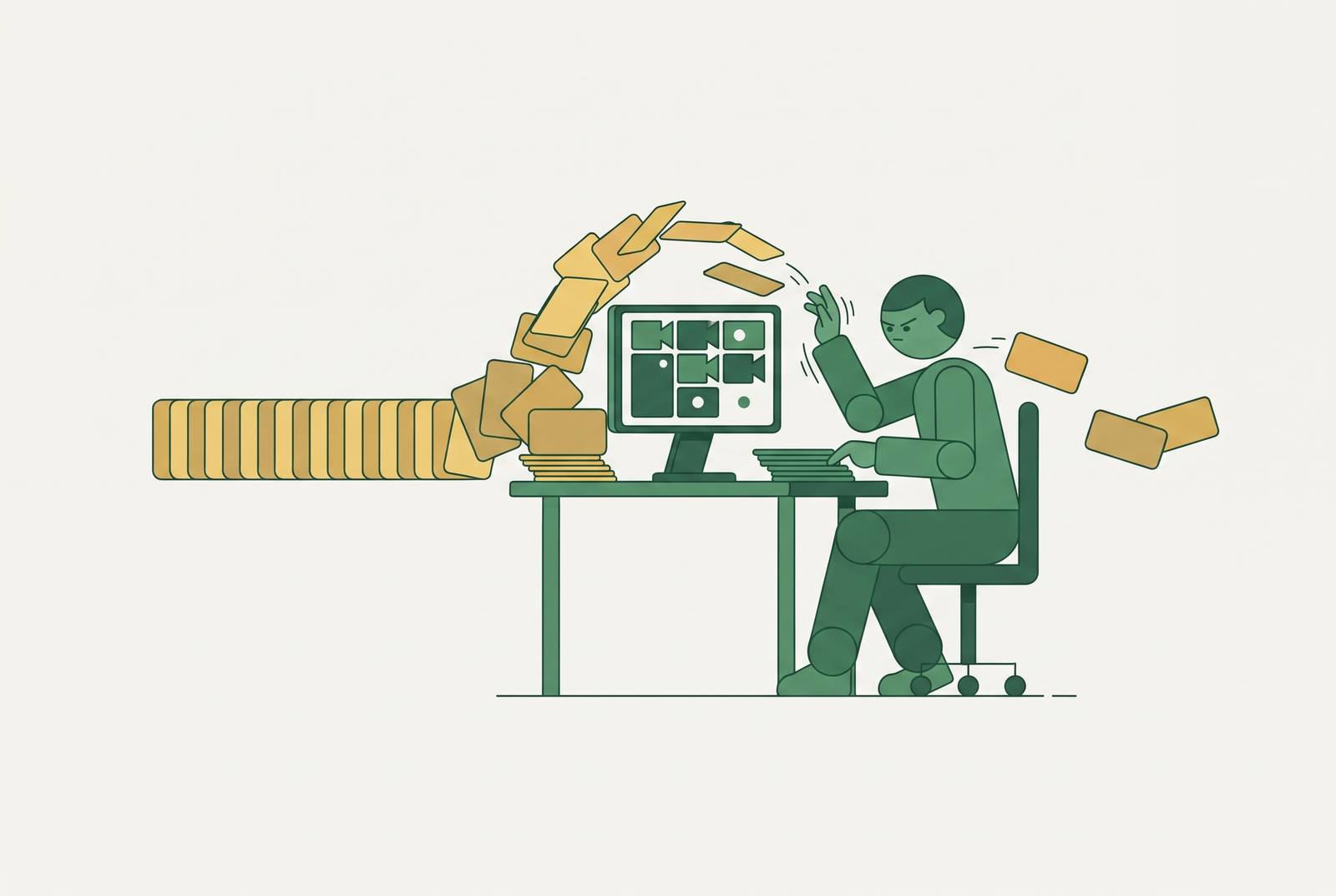
Alarm response time failure in traditional video monitoring centers begins when incoming alerts exceed what operators can evaluate with full attention. Operators adapt by judging familiar patterns, raising escalation thresholds, and leaving some events unexamined. These adaptations transfer coverage risk back to the site, so the remedy must reduce noise before it reaches a human rather than depend on people to absorb an unmanageable queue.
Why do security monitoring centers fall behind on alerts during high-volume periods?
A buyer may imagine attentive eyes on every clip, with each alarm receiving a separate assessment before an operator decides whether to act. That expectation depends on a condition the monitoring model must actually support. Every alert must get enough attention for an operator to assess it. When incoming volume reliably exceeds that capacity, the gap is between the attention the queue demands and the attention people can sustain.
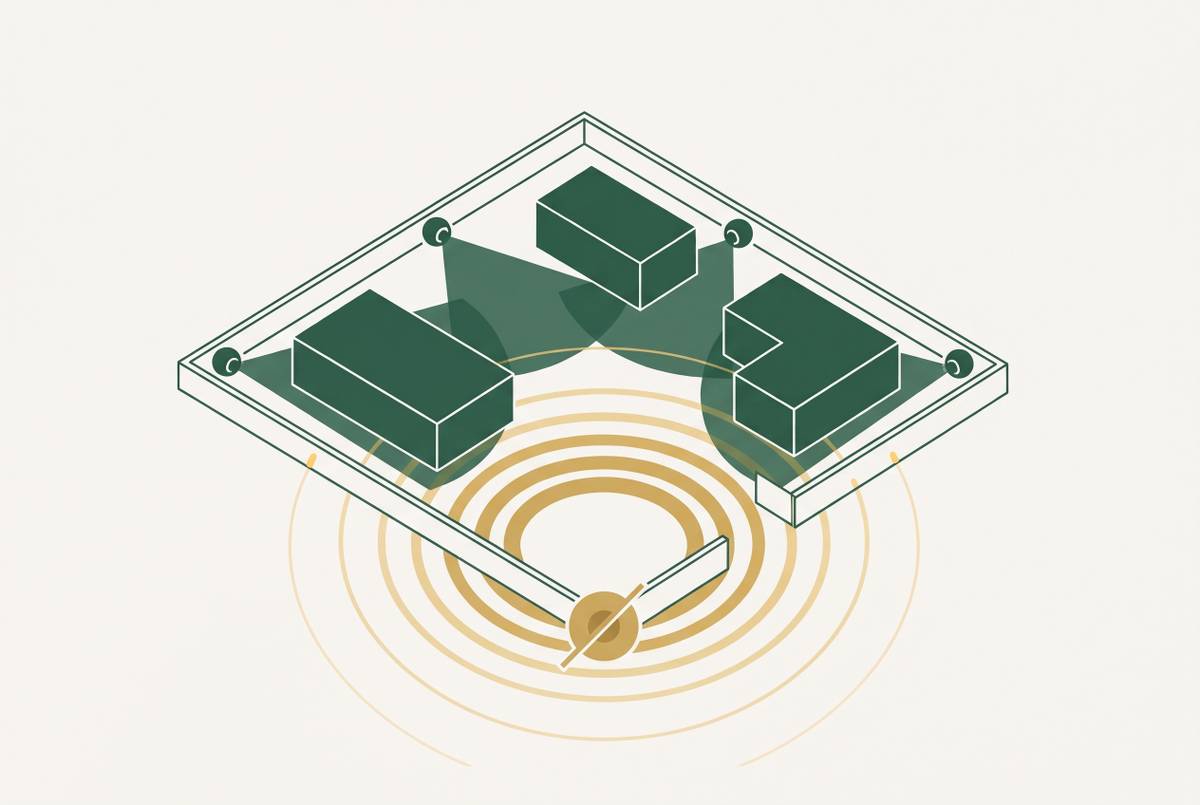
Motion detection creates much of that demand before an operator begins work. A pixel-change trigger can fire on shadows, headlights, insects, and HVAC wash, none of which necessarily requires a human decision. Those signals still go into the same queue as real events. Noise becomes the operator’s principal workload. The structural majority of non-events consumes the capacity intended for the small share of alerts that warrant judgment.
The breaking point therefore cannot be defined by queue size alone. A queue becomes unmanageable when its normal demands exceed sustained attention, even if operators continue clearing entries and the workflow appears active. More headcount does not change what each alert asks of a person or make prolonged vigilance unlimited. Before anyone explicitly acknowledges a coverage failure, the decision process changes to fit the available time.
The first adaptation — triage by pattern rather than by evaluation
The first adjustment is to replace event-by-event evaluation with recognition. Operators learn which cameras, times of day, and alert types almost always produce noise, then clear events that look like the ones they have seen before. The shortcut fits the time available to them. It draws on experience and can be rational for an individual facing more work than full evaluation permits. The design failure lies in making that shortcut a routine condition of coverage.
Pattern-based triage substitutes a prediction about the source for a judgment about the present event. A noisy camera becomes a reason to discount an alert before its context is understood. Familiarity stands in for evidence about this occurrence. The embedded assumption is that the current event is equivalent to the last hundred events from the same source that proved harmless. That assumption can keep the queue moving while weakening the connection between what happened at the site and what the operator concluded.
A new threat actor, a seasonal crowd pattern, or a repositioned camera can make a previously useful association unreliable. The operator’s learned pattern no longer maps to the risk. Without enough context at the moment of triage, an ambiguous event can produce either overreaction or underreaction, depending on which familiar pattern it resembles. Both can happen when operators have too little information and too little time, even when they take care with their work.
This remains a judgment process, however compressed. The operator sees something and decides what it probably means. That distinction becomes important as the queue grows further, because the next adaptations change both the standard for action and whether a decision occurs at all.
The second adaptation — raising the threshold for what counts as worth escalating
Persistent false positives change more than the speed of review. They change what an operator accepts as sufficient evidence to escalate. An event that would have prompted action six months ago can instead be logged as “possible” and filed. The internal bar has moved without a corresponding change in the site’s exposure. Unlike a hurried assessment of one clip, this recalibration can affect every subsequent event that resembles the same uncertain pattern.
The chemical safety case at DuPont Belle illustrates the mechanism outside security monitoring. The CSB draft report states that operators likely became desensitized to an alarm indicating a burst rupture disk because of its history of unreliability. The CCPS Process Safety Beacon describes a history of false alarms and operators who did not know the device had been upgraded. They assumed it was another false alarm. When the alarm indicated an actual incident, its history had already taught them not to treat it as credible.
An alarm can fire as intended yet fail to prompt action because repeated false signals have changed how people interpret it. The Joint Commission’s clinical alarm fatigue research also describes degraded response accuracy when alert demands exceed human cognitive capacity. The pattern is not unique to a monitoring floor.
In security monitoring, the equivalent is a loading-dock camera whose motion alerts cause its zone to be mentally deprioritized. That camera may also cover the entry route used by an organized retail theft team. Raising the action threshold converts some events that should receive attention into false negatives, with potential consequences including compliance gaps, audit findings, and fines.
The third adaptation — systematic skipping and the queue’s silent closures
Events are never examined at all. Alerts age out or are cleared because the queue moves on, without an operator having evaluated them and found them benign.
A silent closure is especially difficult to interpret through activity reporting. The event has no underlying decision to inspect because nobody reached it. Queue activity is not evidence of completed review. A coverage record can therefore show an event passing through the workflow without showing that its content received human attention. This is more serious than flawed triage because there is no assessment whose reasoning can be challenged.
Veritas-RPM, a multi-agent false-positive suppression study published on arXiv, describes NHS remote patient monitoring deployments with false positive alert rates of 74–99% and resulting alarm fatigue that degrades clinical response. Those figures come from patient monitoring and do not describe security centers. Both systems leave people to pick out the few signals that call for action from a stream that is mostly noise. In security operations, fatigue-driven turnover further weakens review because site knowledge leaves with experienced operators. A control room cycling through operators every eight months cannot readily retain the familiarity that helps distinguish an anomaly from ordinary site activity.
Where the coverage risk lands — retail floors, truck yards, and perimeter zones
The cascade concentrates risk in zones whose cameras produce the most noise, even when those zones also have substantial genuine threat exposure. The characteristics that make a camera difficult to monitor can therefore make it especially costly to discount. Coverage weakens according to the history of the signal.
Retail exits and perimeter zones face both sides of this risk. Constant movement produces frequent false positives, while organized and repeat theft is also captured in those areas. Discounting their alerts can allow loss to move undetected. The camera remains present, but its contribution to response depends on whether its events still receive attention. A physical view of an exit is not equivalent to an effective decision about activity at that exit.
Truck yards and logistics perimeters face the same concentration of risk. Weather, headlights, and moving vehicles keep triggering motion detection around areas that hold critical assets. That noise can make operators lose trust in those cameras. Outdoor lots expose the underlying information gap particularly clearly, because weather, shadows, headlights, and animals can all trigger motion without establishing a threat. Object type, trajectory, and time-of-day context distinguish events in ways that pixel change alone cannot.
Fragmented camera and VMS environments add another demand on attention. When operators must toggle between screens to process a single event, the work includes navigation as well as assessment. That friction accumulates across the shift. It adds to the pressure to fall back on familiar patterns or ask for clearer evidence before escalating. The resulting exposure has a physical address, whether a retail exit, a truck yard, or a perimeter zone that generates more signals than the workflow can meaningfully resolve.
Why the standard workarounds — muting cameras, overage fees, offshore seats — do not clear the queue
Common workarounds are economically rational responses to an overloaded service, but they leave its signal problem intact. Muting a noisy camera removes false positives by removing its alerts from coverage. Overage fees shift who pays, while just as many alerts keep coming in. Offshore staffing lowers the cost of each operator, but each alert still asks as much of the person reviewing it.
Muting makes the behavioral shift explicit in configuration. An operator’s learned belief that a camera is not worth watching becomes an administrative setting that excludes its events from the queue. The queue improves by narrowing what receives attention. With lower-cost staffing, signals still come in and the ratio of real events to noise stays the same. Those operators face the same limits on sustained attention, while distance and high turnover make site-specific knowledge harder to accumulate.
That knowledge can decide whether a regular cleaning crew looks like part of the day’s work or an intrusion. It cannot be replaced simply by lowering the cost of the seat receiving the alert. Market consolidation that adds video verification to installed reactive-signaling bases shows the same limit on what those systems can do. Signal forwarding alone does not resolve an event. The operational value lies increasingly in establishing what the signal means before it consumes scarce human attention.
What a monitoring model that does not depend on the behavioral cascade requires at the design level
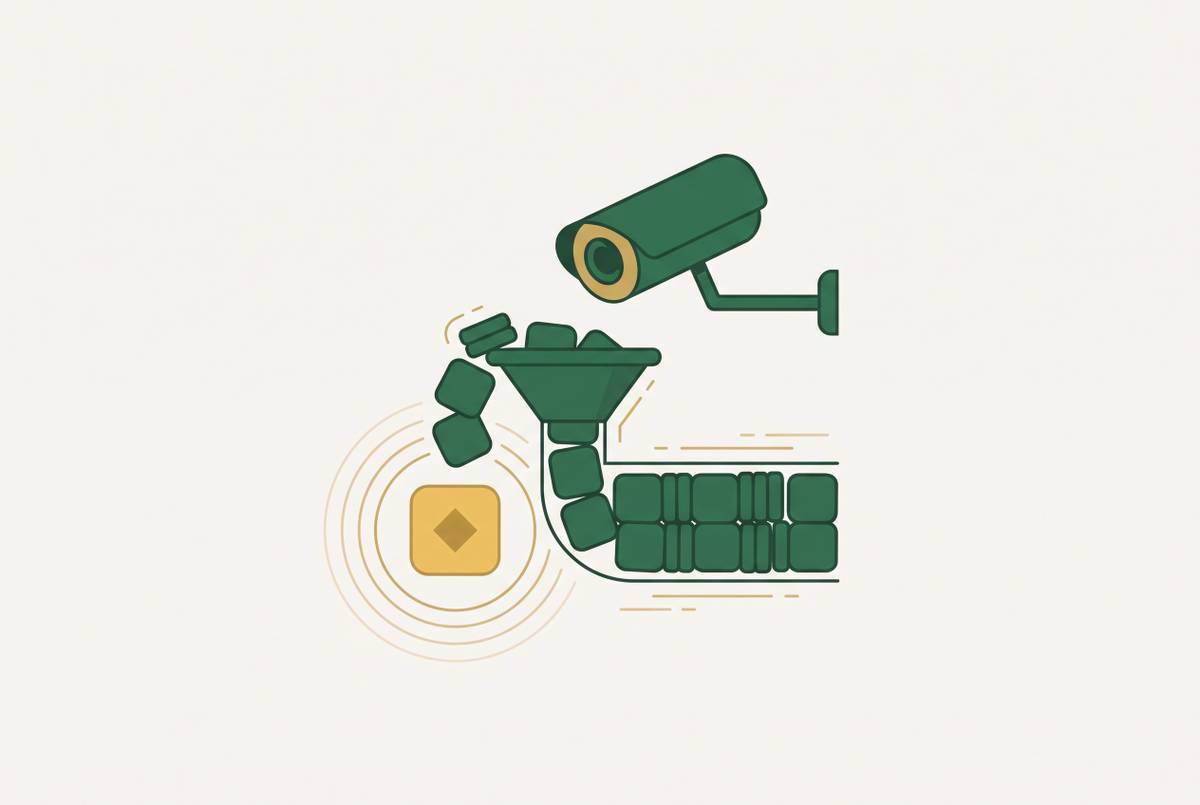
The design response must begin before the human queue. Even with training, people can pay attention for only so long, and adding staff alone cannot fix a signal stream made up mostly of non-events. The first requirement is pre-verification that evaluates whether an alert represents a real person, a real vehicle, or a condition worth acting on. Removing the structural majority of noise at that stage preserves attention for the events that remain. The system must perform the routine discrimination that an overloaded workflow otherwise forces operators to approximate.
Agentic pre-verification with qualified human judgment follows from that requirement. The automated layer evaluates events in context before presenting cases that need a person’s assessment. Humans belong at the judgment layer. People are still needed when events are unclear, when an escalation has high stakes, or when a case calls for knowledge of the site. This division reserves human attention for the places where missing context or consequential uncertainty makes that attention irreplaceable.
UL Solutions’ certification program evaluates whether a monitoring center’s alarm validation scoring process and delivery system comply with ANSI/TMA AVS-01. The process may be manual or automated. The standard supports consistent scoring. Its purpose includes reducing unnecessary dispatches and improving the allocation of public-safety resources.
The lesson for evaluation is to test the proposed workflow under the conditions it will actually face. Night/IR footage, partial rain, low light, and occlusion ask different things of the system than clean daytime streams do. A proof of concept must include those demands. Without the actual site’s conditions and operating window, it does not test the system the operator will use.
The decisive design criterion is whether a real event reaches a qualified person with enough context and enough time for considered action. A monitoring model should not require operators to trade evaluation for throughput merely to keep functioning. Human judgment becomes dependable when the workflow protects the capacity to exercise it.
Sources
- Veritas-RPM: Provenance-Guided Multi-Agent False Positive Suppression for Remote Patient Monitoring
- Artificial Intelligence Technologies for Coping with Alarm Fatigue in Hospital Environments Because of Sensory Overload: Algorithm Development and Validation
- Can Risk-Based Alerting Mitigate Cybersecurity Alert Fatigue?